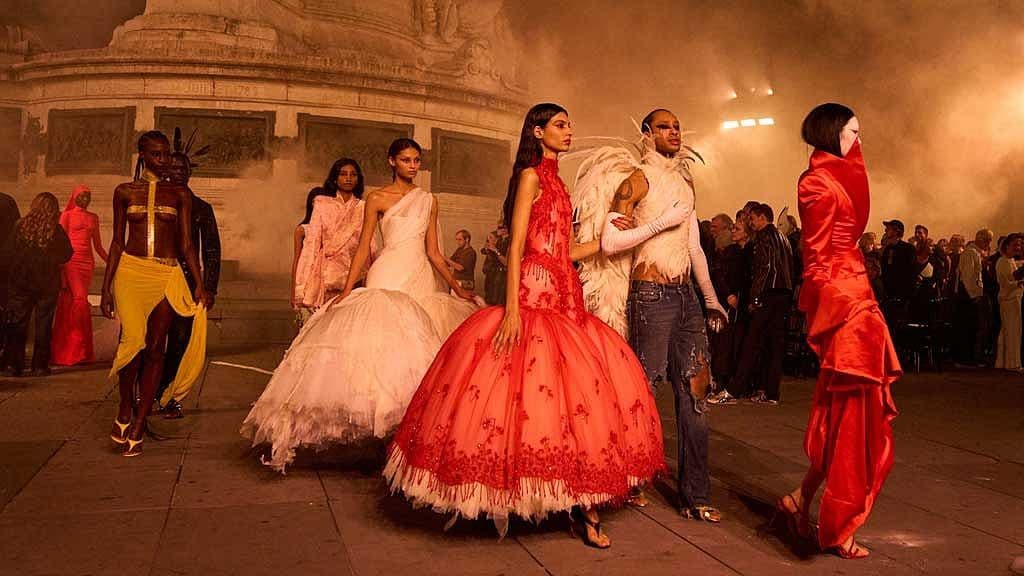
I still go back to Dior’s Fall 2000 haute couture show, the one Galliano titled “Unstable Wedding.” It opens with a model in a tight corset parodying the Pope, swinging a censer down the runway while the soundtrack braids Alanis Morissette’s voice into the sound of a whip cracking. The first time I watched it, my reaction wasn’t admiration exactly. It was closer to alarm, the feeling that a fashion show could be genuinely dangerous instead of merely impressive. That is the designer John Galliano: Horizons wants the public to remember. He is not the only version of the man, and when Vogue and the Met announced the exhibition on July 31, my own reaction wasn’t anger. It was two things refusing to sit quietly next to each other.
The facts of the announcement are simple enough. The Costume Institute’s spring 2027 exhibition, John Galliano: Horizons, will survey his work from his 1984 Central Saint Martins graduation collection through Givenchy, Dior and Maison Margiela. What complicates the exhibition is the same question its announcement raises directly: how should artistic achievement be understood alongside ethical accountability?
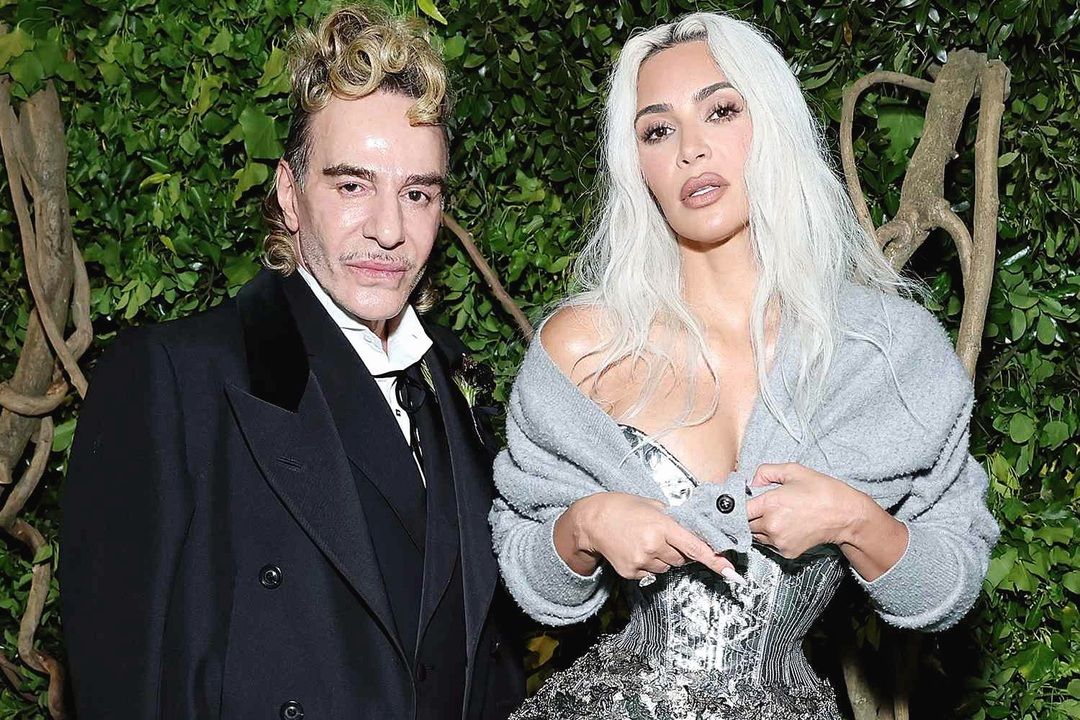
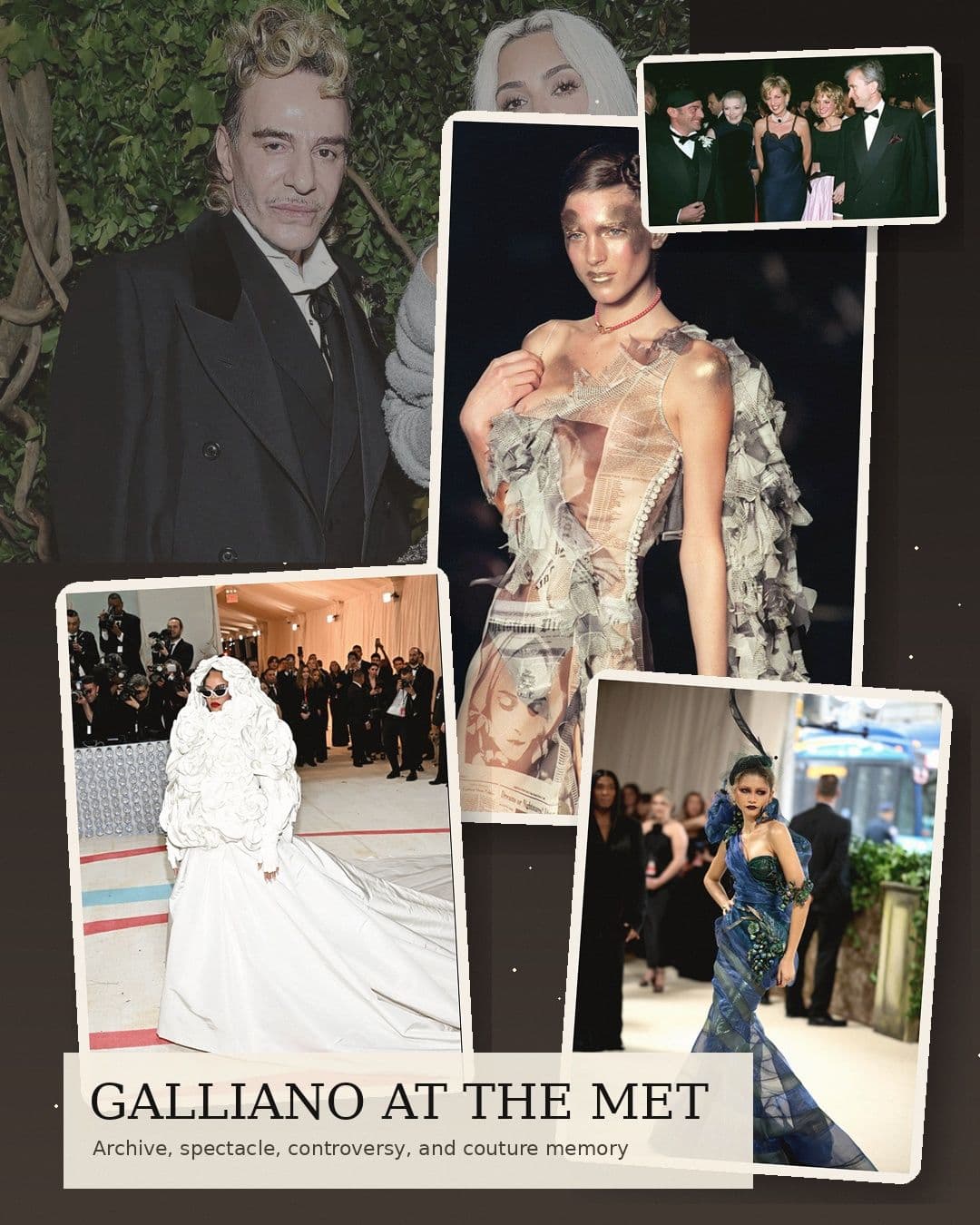
I am not interested in pretending the work is ordinary, because it isn’t. Galliano ran Dior for fifteen years, from 1996 to 2011, after two seasons at Givenchy, and his signature there was the bias cut, a nearly century-old technique he pushed until it did something new. A bias-cut dress is sewn on the diagonal of the fabric instead of along the straight grain, which lets it cling and stretch without a single zipper or seam doing the work. His newspaper-print version of it, first shown at Dior’s spring 2000 ready-to-wear and later worn by Sarah Jessica Parker on Sex and the City, turned a headline into something that moved like water across a body. His spring 2000 couture collection, built around imagined homelessness, dressed models in gowns twisted to look like garbage bags and boning that burst through the hem like a broken umbrella. It was grotesque on purpose. Designers and editors still study that decade because he solved problems of drape, illusion and spectacle that almost nobody else was even attempting.
Here is what any language about a “moment” risks softening. In 2011, Galliano was filmed in a Paris bar saying he loved Hitler and that people like the patrons should have been gassed. Dior fired him. A French court found him guilty of public insults based on origin, religion, race or ethnicity and imposed a suspended €6,000 fine. He has said he had no memory of the incidents and attributed his conduct to severe alcohol and drug addiction. That may explain his condition. It does not erase the harm, and it is not an argument for institutional absolution.
To its credit, the Met’s official announcement says the exhibition will directly address the rupture caused by Galliano’s antisemitic, racist and anti-Asian conduct in 2010 and 2011, his dismissal and conviction, his treatment for substance addiction, and his later acknowledgment of his actions. It also says the gallery will resist a conventional disgrace-and-redemption story. That is a serious framework. The question is whether the exhibition can make that framework felt rather than merely stated.
This is also a story about institutional image-making: who gets framed as a complicated genius, which histories are made legible, and how an audience is prepared to receive them. Cohesive has examined the same machinery in The Algorithm as Creative Director, where visibility does not simply reflect culture; it helps manufacture the conditions under which culture is judged.
I do not think this is only about Galliano. Museums, magazines and luxury houses all translate difficult histories into stories audiences can consume. Money, access and a well-managed comeback can make that translation feel inevitable. The risk is not that the public will forget what happened. The risk is that the institution’s confidence will make the history feel resolved before visitors have encountered it.
Fashion institutions often reward a version of risk that has already been made safe enough to photograph, sponsor and explain. That is why the industry’s recurring declarations of aesthetic death can feel so hollow. As Quiet Luxury Is Dead. What Replaced It Is More Interesting argues, the industry often mistakes a shift in the rooms it watches for a genuine revolution. A Galliano retrospective carries a different moral weight, but the instinct to convert friction into a controlled narrative is familiar.
I keep thinking about Rick Owens in this context, because the comparison makes my own discomfort harder to wave away. Owens has been building the same dark, draped, architectural language since 1994, and the Palais Galliera gave him a full-scale retrospective tracing his path from patternmaker to a designer who reshaped how a generation thought about volume and the body. Owens would never have brought this exhibition the same scandal or guaranteed conversation. He also would have brought decades of work that nobody needed to pre-negotiate.
But I want to push back on my own comparison before I lean on it too hard. Museums do not choose their subjects by moral cleanliness, and a designer’s lack of scandal is not the same thing as historical importance. Galliano changed the scale of what a fashion show could do. The Met would be dishonest if it pretended his archive did not earn serious study. My problem was never that the museum wants to show his work. It is that the language of honor can make a complicated history feel resolved before the doors even open.
Luxury houses and cultural institutions both use history to manufacture trust in the present. Loewe 180th Anniversary Is the Argument examined how heritage can become insurance for a new regime. Here the stakes are higher: the Met must show that historical recognition is not the same thing as moral clearance.
I do not know what accountability is supposed to look like inside a museum retrospective, and I am suspicious of any institution that talks like it has already solved that question. I will probably watch the gala next May. I will probably save a few images from the exhibition when it opens. Pretending otherwise would make this argument cleaner and less honest. The work is too significant to dismiss, and what happened in that Paris bar is too serious to package as a brief interruption in an otherwise triumphant story.
The Met does not have to choose between showing the archive and naming the harm. It has to prove it understands the difference between recognizing talent and quietly absolving its maker. That is what I will be watching for next spring: not whether the clothes are beautiful, because I already suspect they will be, but whether the exhibition lets that beauty do the work forgiveness has not earned yet.
Quick facts
John Galliano: Horizons opens at The Met Fifth Avenue on May 9, 2027, and runs through January 9, 2028. The exhibition covers Galliano’s own label and his work at Givenchy, Dior and Maison Margiela. The museum says the exhibition will address both his creative accomplishments and the conduct that altered his career and public reception.
A few questions worth asking now
What is the 2027 Costume Institute exhibition?
John Galliano: Horizons is a retrospective covering the British designer’s career. Vogue’s announcement provides additional exhibition context.
Why is the exhibition controversial?
Galliano was dismissed from Dior after antisemitic and racist conduct in Paris and was later convicted by a French court. Critics question whether a major institutional retrospective can examine the work without turning recognition into absolution.
What has the Met said about the controversy?
The museum says the exhibition will directly address Galliano’s conduct, its consequences, his addiction treatment and his later acknowledgment of his actions, while considering how aesthetic achievement and ethical accountability intersect.
For context on Galliano’s later public response, see The Guardian’s report on his first interview after the Dior firing.