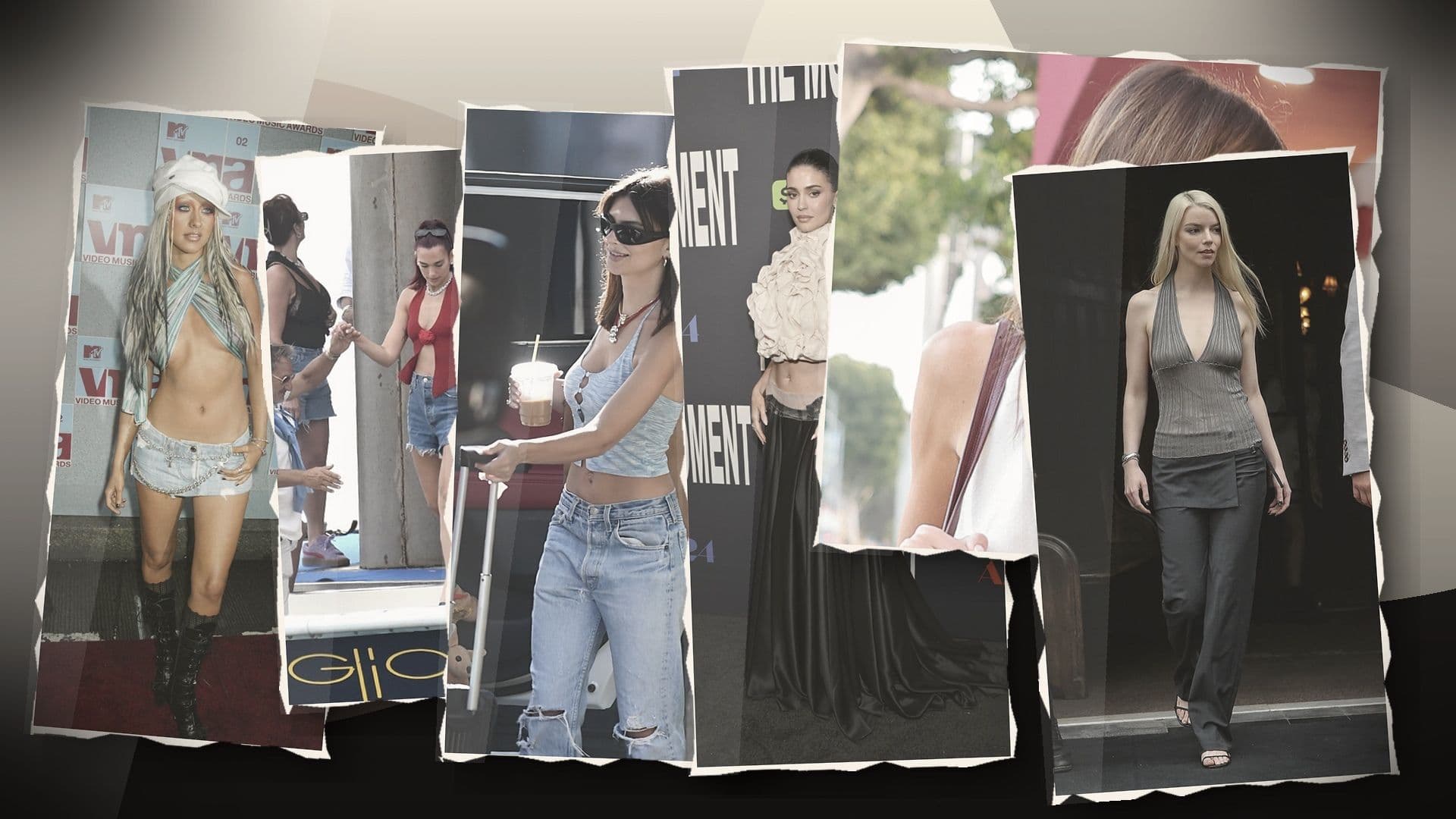
If you’re cute on Instagram, it will sell. — Simon Porte Jacquemus.
There is a question no one in the fashion industry wants to answer out loud: who is actually making the clothes? Not the designer whose name is stitched into the lining. Not the studio team in some Parisian atelier. The honest answer, if you follow the decisions back far enough, is that a machine learning model running inside a server in Menlo Park has more influence over what ends up on a runway than most creative directors will ever admit.
This is not a conspiracy. It is not even subtle. The data has been public for years, the confessions have been made in glossy profiles and investor decks, and still the industry moves forward as though fashion remains a discipline of instinct and vision, the lone genius staring at a bolt of fabric and hearing something. That mythology is useful. It protects the premium. But it is increasingly fictional.
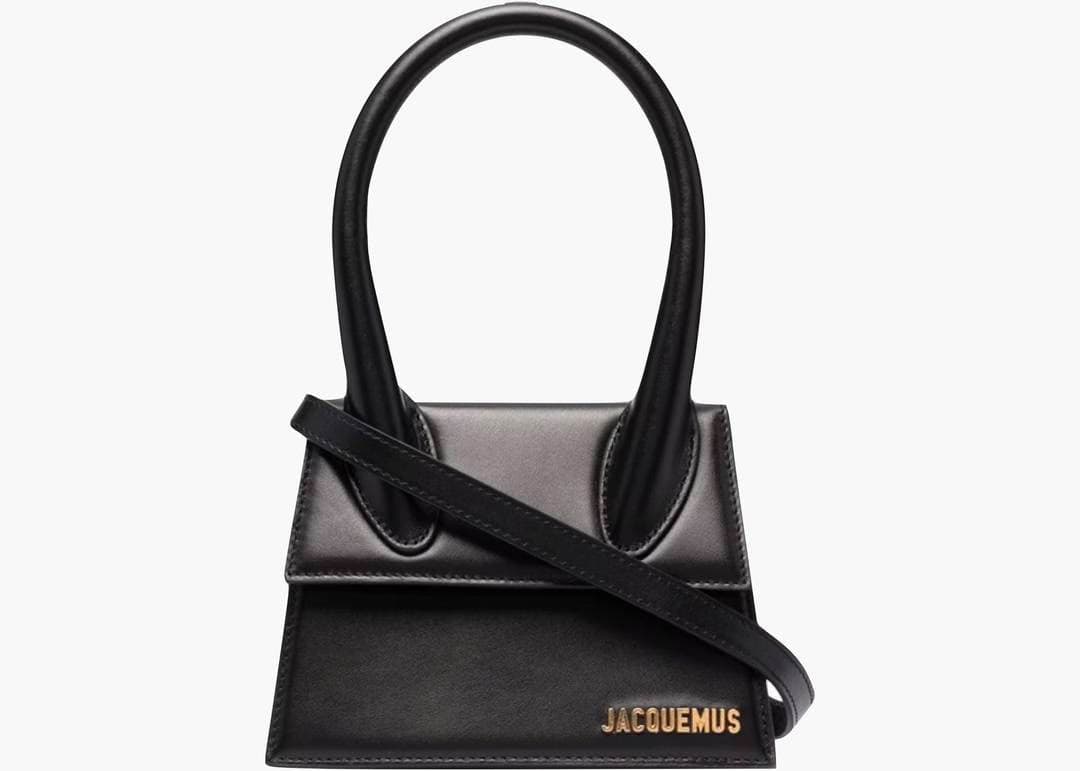
Simon Porte Jacquemus said it himself, without apology, in a 2019 profile for W Magazine. He designed the Le Chiquito handbag to be absurd, comically small, visually loud. He designed La Bomba, the cartoonishly oversized sun hat, because he understood that something that large would be photographed. His team told him no one would wear the hats. They sold hundreds. His own explanation for why he made both objects: if it is cute on Instagram, it will sell. He did not frame this as compromise. He framed it as strategy. The distinction matters.
What Jacquemus articulated so plainly, thousands of other designers are living without saying. The question of what gets made in fashion is no longer answered primarily in a studio. It is answered by what an algorithm surfaces, what a feed rewards, what a save or a share signals back to a recommendation engine that is, in its own mechanical way,expressing a preference. The algorithm has opinions. And the industry is listening.
To understand how this happened, you have to understand what Instagram’s recommendation system actually does. It does not simply show people content from accounts they follow. It predicts, with considerable accuracy, what a given user will engage with based on prior behavior, and it distributes content accordingly. What the platform rewards is retention: watch time on Reels, saves on carousels, DM shares, profile visits. These signals tell the algorithm that a piece of content has value, and the algorithm responds by amplifying it. The content that performs rises. The content that does not, disappears.
For a fashion brand, this creates a feedback loop with serious structural consequences. You post a look. The algorithm measures engagement. High engagement means the algorithm shows the look to more people, who engage with it, who buy it, who post their own versions, whose posts the algorithm then amplifies, which tells the brand what its customers want more of. This is not trend forecasting. This is trend manufacture, with the platform acting as the invisible production house.
Companies like Heuritech have made this feedback loop into a business. Their AI scans three million social media images every day, analyzing over two thousand fashion attributes including colors, silhouettes, prints, textures, and proportions. They claim predictive accuracy above ninety percent for up to two years in advance. Louis Vuitton uses it. Dior uses it. The practical implication of this technology is that a designer sitting down to plan a collection is increasingly doing so with a data report in hand that tells them which trends have momentum on social media, which are declining, and which the algorithm is likely to reward in the coming season. The creative brief has an analytics annex.
Stitch Fix’s vice president of buying described the shift plainly to NPR in 2025. Her team used AI to decide between a red stripe and a blue stripe on a shirt. Not as a tiebreaker. As the primary input. In the past, she said, you either made a gut decision or you waited weeks for overseas samples. Now you run the data. The intuition has not disappeared entirely, but it has moved to a secondary position, consulted after the machine has already spoken.
What does it mean for the clothes themselves when the primary audience for a design decision is not a human body but a screen? The answer is visible if you know how to look.
Consider the dominance of what critics sometimes call “high-contrast dressing” over the last several years: clean silhouettes, bold color blocking, looks that read immediately in a thumbnail. This is not a coincidence of taste. This is the aesthetic logic of a platform that processes images at the scale of millions per day and rewards what registers quickly. A nuanced garment, something with complexity that reveals itself slowly through wear, through touch, through time, is not an algorithm’s friend. It requires the kind of attention that a feed does not train people to give.
The homogenization critics have observed across contemporary fashion is partly an echo chamber problem and partly a compression problem. The algorithm creates the echo chamber: a certain aesthetic gains traction, the platform surfaces more of it to users who engaged with it, those users engage with more versions of it, brands see the data and produce more versions, and the cycle feeds itself until the aesthetic is everywhere and nowhere at once, inescapable and exhausted simultaneously. The compression is what happens to design complexity in the translation from body to screen. Everything must be legible at small scale, in two seconds, against the competition of everything else on a feed.
A study published in the Journal of Fashion Marketing and Management found that seventy-eight percent of respondents acknowledged being influenced by social media content in their purchasing decisions. The researchers also found that consumers perceived social media as more authentic and more relatable than traditional fashion media, including runway shows and magazines. This perception shift is significant. The runway was always a performance, always somewhat divorced from wearability, but it served as aspirational fiction, a projected ideal toward which consumers might orient themselves. Social media does not project an ideal. It reflects and amplifies an existing desire, tells you what you already want, and then asks brands to make more of it.
There are designers who have grasped this shift and decided it is not something to resist but something to architect. Jacquemus is the clearest case. His shows are not incidentally photogenic. They are designed as image objects first, fashion objects second. The pink runway through a lavender field in Provence was not chosen despite its Instagram potential. It was chosen because of it. He told WWD that he wanted the setting to look like a postcard, almost too much like a postcard. The phrase is revealing. He understood that the algorithm rewards the familiar made spectacular, the recognizable made scroll-stopping, and he gave it exactly that.
This is a form of creative intelligence. It is also something different from what fashion has historically asked of its designers. Karl Lagerfeld working at Chanel was not thinking about what would perform in a two-second video preview. Yves Saint Laurent was not designing for the save rate. The conditions of creation have changed, and the change is not neutral. When you design for a feed, you are designing for attention, not for intimacy, not for longevity, not for the experience of actually living in the clothes.
The traditional trend lifecycle, which once unfolded over eighteen months from runway to retail to mainstream adoption, has collapsed. It now takes weeks. A micro-trend can surface on social media, be adopted by fast fashion producers within days, peak globally, and be declared over before a designer working on a proper seasonal collection has even begun to sample. The brands that survive in this environment are the ones that treat the algorithm as a collaborator, feeding it content that teaches it what they are, training it to surface their work to the right audience, and reading its outputs as early intelligence about what their customers want next.
None of this is without cost.
The pressure to produce content that performs algorithmically has accelerated what critics call the fast fashion cycle in ways that go beyond economics. It has accelerated the creative cycle as well, demanding that designers not only produce more collections but produce them with greater visual legibility and less conceptual risk. The garment that is interesting to think about is not always the garment that stops a scroll. The collection that
demands sustained attention is not always the collection that generates shares. The algorithm does not penalize ambition intentionally. It simply rewards what its users reward, and users on a feed are not, on average, in the mood for difficulty.
This creates a specific kind of pressure on younger designers and independent labels, which are also, not coincidentally, the designers most likely to produce something genuinely new. They are working without the institutional resources of the major houses, which means they depend more heavily on organic social reach. They are therefore more subject to algorithmic logic, more likely to make decisions based on what the feed has shown them works, more likely to calibrate their work to platform conditions. The creativity most likely to be stifled by the algorithm is the creativity that could not afford to ignore it.
African designers face a particular version of this problem. The algorithm, trained primarily on data from Western markets and Western consumption patterns, does not have a sophisticated vocabulary for work that draws on African textile traditions, African silhouette logic, African pattern relationships. When a garment does not fit neatly into the aesthetic categories the algorithm has learned to recognize and reward, it tends not to surface it. This is not malice. It is the ordinary bias of a system trained on the distribution of what was already popular. But ordinary bias at scale is structural exclusion, and the fashion industry has not meaningfully grappled with what it means that the infrastructure of contemporary visibility was built without African aesthetics at its center.
The more interesting question, past the diagnosis, is what it means to make something meaningful under these conditions. Because the algorithm is not going away. The feedback loop between social data and design decision is not going to be dismantled by critical thinking, however precise. The machine is embedded in the economy now, and the economy has decided it prefers the machine’s recommendations.
What is possible is a more honest accounting of what has changed. Fashion has always been subject to external pressures, market forces, cultural moments, the taste of whoever controls the money and the platforms. The editor as creative director is not a new phenomenon. Anna Wintour shaped what got made at the brands she covered by signaling
what she would put on the cover, what she would praise, what she would ignore. The difference is that Wintour had taste, formed by experience and conviction, that pushed back against the market as often as it accommodated it. The algorithm has no taste. It has a loss function, which is not the same thing.
A loss function optimizes for a defined metric. Instagram’s metrics are engagement signals: watch time, saves, shares. These are proxies for value, not value itself. A garment can stop a scroll and be forgotten in a week. A garment can go unloved on a feed and become a collector’s object, a reference point, a piece that shapes the thinking of every designer who sees it in person. The algorithm cannot tell the difference. It was not built to.
This is the central problem that the fashion industry has not found the language to address directly. Not because the people inside the industry are incapable of seeing it, but because naming it clearly would require acknowledging how much authority has already been ceded, and to what. The creative director on the masthead now shares the role with a recommendation engine. The studio is one input among several. The moodboard competes with the analytics report. And the clothes, increasingly, are made for a screen that will not be wearing them.
This is where the fashion publication has a specific responsibility that it is largely failing to meet. Coverage that treats algorithmic virality as equivalent to creative significance is not neutral. It is participation in the feedback loop. When a magazine covers what performed on social media rather than what deserves to be seen, it amplifies the algorithm’s judgment rather than offering a counterpoint to it. The editorial function, properly understood, is to interrupt the feedback loop, to surface what the machine would not, to insist on a standard of evaluation that the engagement metrics cannot reach.
That is a harder proposition than it sounds. Publications depend on traffic, and traffic increasingly follows the algorithm. But the alternative to doing it is a fashion press that is essentially a mirror of Instagram, slightly delayed, with longer captions. That is not criticism. That is curation, and not even original curation at that.
The question for every designer, every editor, every buyer who has not yet surrendered entirely to the logic of the feed is the same: what are you making this for? If the honest answer is that you are making it to perform well on a platform, that is a legitimate business strategy and you should own it clearly, as Jacquemus has. If the answer is something else, something about beauty or subversion or the specific intimacy of a garment that changes the person wearing it, then the algorithm is not your creative director. It is a condition you work within, like weather, like the economy, like every constraint that great work has always been made against.
The clothes still have to be real. Whatever the machine tells you to make, a human body has to live in it eventually. That is the fact the algorithm cannot process, the variable it was never trained on. And it remains, despite everything, the most important one.