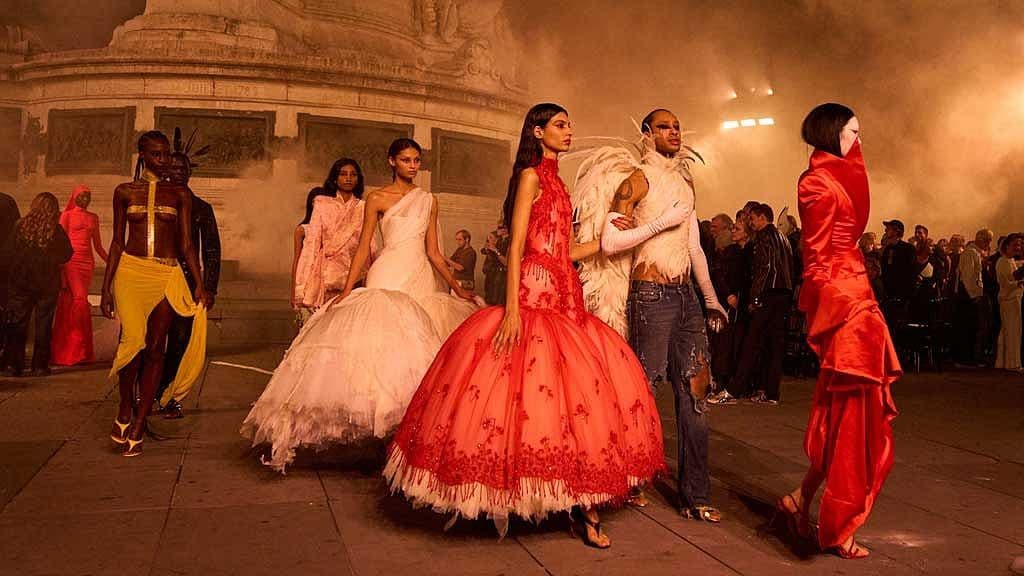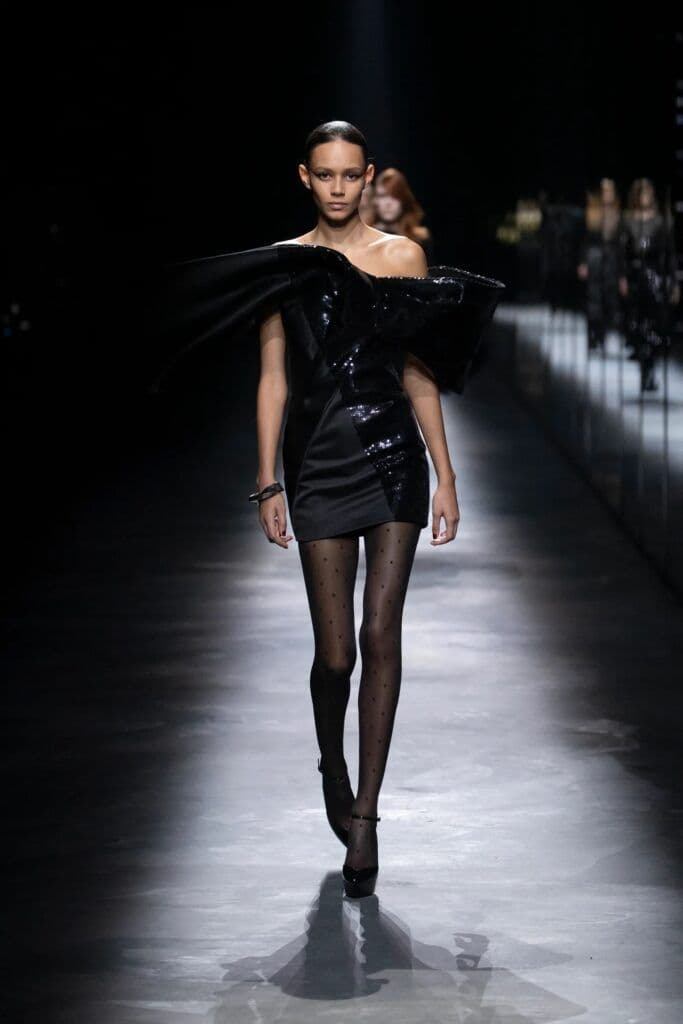
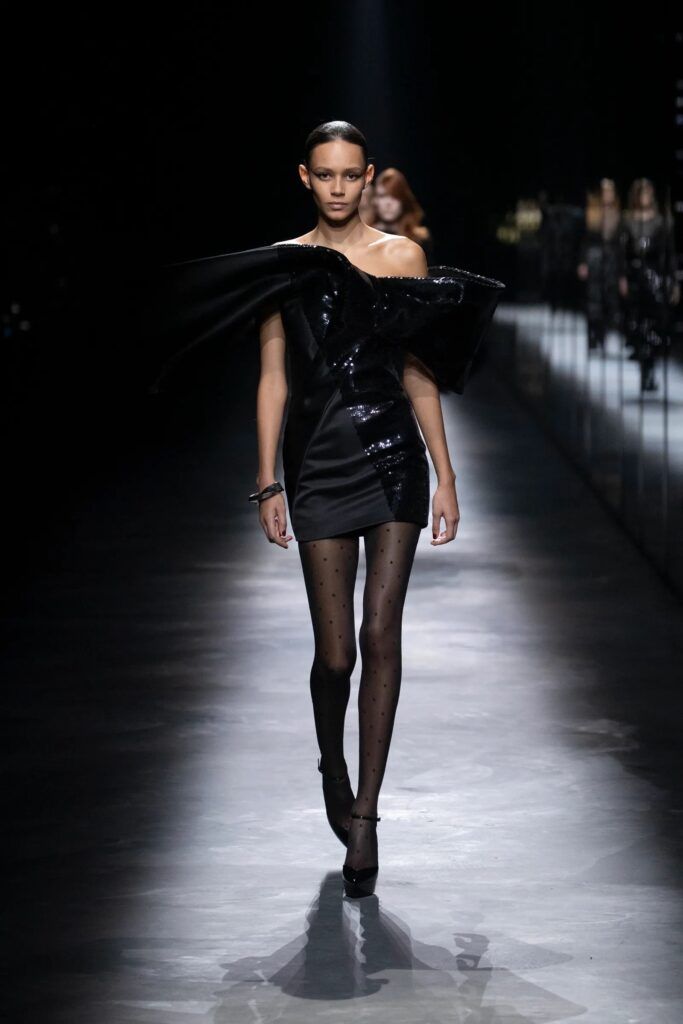
At the Saint Laurent show in October, the lights dropped and nobody in that room reached for a single word about restraint. Models came out wrapped head to toe in black leather, the kind of leather that makes a sound when a woman moves, built to be heard then seen. A few shows later Missoni sent its signature chevron down the runway in colors loud enough to argue with the lighting rig, statement necklaces stacked on top like the print itself wasn’t already doing enough talking. Balenciaga and Chanel answered with feathers, dramatic ones, dyed in colors no bird has ever worn, in textures built for the kind of close, unforgiving camera that only exists in a front row seat now. Nobody on any of those runways looked like they were trying not to be seen.
That was the season the headlines arrived almost on schedule, in that breathless industry register that announces a death every few years like it just discovered the obituary page. Quiet luxury is dead, they said, on Medium and in trend decks and across the kind of fashion press that treats every swing of the pendulum as a personal revelation. UBS, in its 2026 European Luxury Outlook, said something close to the same thing with considerably less drama and considerably more weight behind it. The bank flagged a move away from quiet luxury toward pattern-driven, expressive design, the kind that had already lifted Missoni and Pucci through a brutal two years for the wider sector. The numbers underneath that sentence tell their own story. Jewelry climbed from fifteen percent of luxury sales in 2021 to eighteen percent by 2024. Leather goods, the great quiet luxury staple, slid from forty-six percent to forty-four. Small percentages, in an industry that usually moves by inches. This time the inches added up to a fault line.
To understand what just cracked, you have to remember what quiet luxury actually was, underneath the styling. It rose out of logo fatigue Consumption Chic: Fashions oldest lie is back and pandemic restraint and a recession-shaped instinct to look like money without looking like you were spending it where anyone could see. The Row, Loro Piana, Brunello Cucinelli, a wardrobe built on fabric you had to touch to verify, on a Birkin whose resale value had quietly overtaken its retail price and turned a handbag into an asset class. Television gave the look its most famous costume rack a few seasons back, and within months the whole aesthetic had a name, a hashtag, and a sound clip on every platform built for noise. That is the part the trend pieces tend to skip past. A style built entirely on the premise of not announcing itself had to go viral to spread. It needed millions of people repeating its name out loud to survive. Quiet luxury was never actually quiet. It just required a different kind of fluency to read, an insider’s vocabulary dressed up as the absence of one.
There was also a slower, less glamorous reason quiet luxury started to curdle, and it shows up in the receipts rather than the runway. Bank of America’s analysts spent early 2025 cataloguing what they called overdone price hikes across the sector, the kind that asked customers to pay markedly more for garments that, by design, gave them nothing visible to show for it. A logo-free cashmere sweater at three times its previous price is a hard sell once the discretion stops feeling like taste and starts feeling like a tax. Consumers who had spent two years being told that restraint was the height of sophistication started doing the math on what restraint actually cost them, and a lot of them did not like the answer. Quiet luxury did not just lose a culture war to a louder aesthetic. It lost a value argument to its own price tag.
Not everyone inside the industry agrees the thing has actually died, and the disagreement is worth sitting with rather than flattening. One veteran fashion week regular wrote, after a full week of shows this spring, that what she saw backstage and front row told a more complicated story than the headlines did Everyone wants Nigerian Fashion. Nobody wants to pay for it. . The drama was real on the runway, she allowed, but in the rooms where the women she actually admired were getting dressed, the palette stayed tonal, the styling stayed deliberate rather than excessive. Her argument was that quiet luxury is not dying so much as maturing past the point where it needs a hashtag to justify itself, settling into something closer to a private habit than a public performance. That argument deserves real weight. It is also, in its own way, proof of the larger point. The people who can afford to ignore a trend cycle entirely are the same people quiet luxury was always coded for in the first place. Maturity is a luxury too, and not everyone gets billed for it the same way.
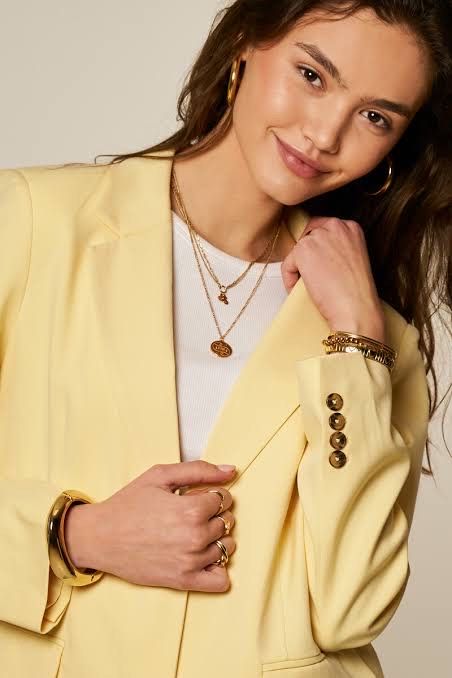
Which gets you to the other, larger reason the pendulum swung, and it has very little to do with taste. A beige cashmere sweater does not stop a scrolling thumb. It cannot. The platforms that now decide what gets called a trend are built to reward friction, color, a shape the eye catches before the brain has finished the sentence describing it. Logos did not come back because the world fell back in love with logos. They came back because a logo is the cheapest, fastest unit of legibility available in an attention economy that gives you roughly a second and a half to make your case. Pinterest’s trend forecasters gave the moment a name for 2026, Glamoratti, an eighties-inflected return to sculpted shoulders, funnel necks, and jewelry described, in the report’s own language, as getting chunkier, bolder, and golder by the month. Searches for eighties luxury rose two hundred and twenty-five percent. Niche perfume collections, the kind built to be unmistakable in a room, jumped five hundred percent. None of that is an accident of style. It is a market responding, in real time, to what actually performs.
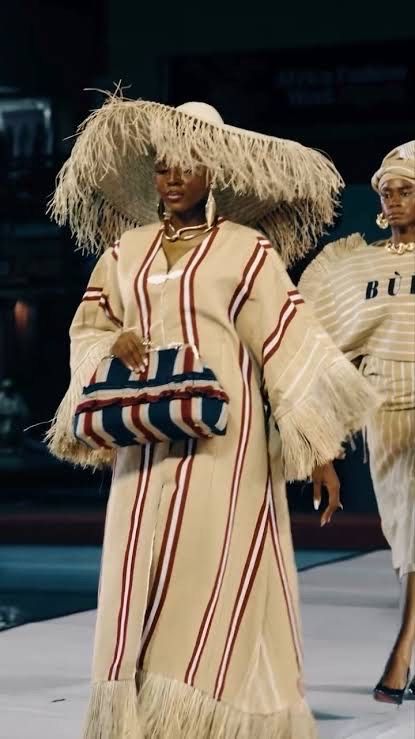
Here is where the story most fashion outlets are telling falls apart, and where the more interesting one starts. The press keeps framing this as a pendulum, a decade of decadence returning after a decade of restraint, as if the entire industry shares one clock. Spend a season actually inside Lagos Fashion Week and that framing collapses on contact. Walk the Spring/Summer 2026 shows and you find raffia, a material the West has spent decades filing under craft rather than couture, reworked into refined, sculptural pieces by houses like Pepperrow, Cynthia Abila, and Bababyo, woven and dyed into garments that carry the same intentionality any Paris atelier claims for its embroidery. Cowries, shells, and coral beads carried weight that had nothing to do with decoration and everything to do with ancestry. Ejiro Amos Tafiri marked fifteen years in business with a maximalist run of more than ninety looks across womenswear, menswear, and childrenswear, color and volume stacked without apology. Wanni Fuga opened with a traditional procession, Eyo masquerades and all, before a single look hit the runway. None of this was a reaction to anything. None of it was a swing back toward a register the designers had ever left.
Maison Alu’lla, a Nigerian womenswear house built around the idea of womanhood passed down rather than invented, opened its Spring/Summer 2026 collection in restrained black before letting the story bloom outward into sheer dresses, bubble skirts, and prints loud enough to read across a tent, closing on a single black, voluminous silhouette that somehow held both registers at once without treating them as opposites. That instinct, holding quiet and loud inside the same sentence without flinching, is precisely the instinct the Western trend cycle keeps insisting is a contradiction in need of resolving, a closet that has to pick a side every few years. It is worth noting, too, that the appetite for this language is not confined to fashion. Search interest in Afrohemian home decor, the same vocabulary of pattern, texture, and natural material rendered in interiors rather than on the body, climbed more than two hundred percent year over year according to Pinterest’s own data, the same data set that produced Glamoratti. The audience driving both numbers is largely the same audience, Gen Z and millennials reaching for identity over uniformity, which makes the timing considerably less coincidental than the trend reports are willing to admit.
That is the actual story underneath the headline, and it is the one worth sitting with. The binary everyone keeps reaching for, quiet against loud, was never a universal description of fashion’s mood. It was a description of where a handful of European houses happened to be standing in a given year, mistaken by the press for the industry’s entire heartbeat. When a Paris or Milan house leans into color, beading, and volume and calls it a bold creative swing, it earns a trend report and a name like Glamoratti. When African designers have built entire houses on that same instinct for generations, color worn with intention, ornament that carries memory, cloth that tells a family’s story before a single word is spoken, the same vocabulary gets filed under heritage, under craft, under the word ethnic, and rarely under the word the industry saves for its highest compliment. Luxury. The word tends to arrive only once a house in Europe picks up the same gestures a few seasons later, at which point the industry calls it new.
It was not new in 2022 either, when runway footage from Lagos Fashion Week was pulled directly into the Victoria and Albert Museum’s Africa Fashion exhibition, alongside the designers and photographers who made it. The institutional recognition existed without waiting on a buyer in Paris to validate the vocabulary first. What hasn’t caught up is the money, the trend forecasts, and the language the global fashion press reaches for when it tries to describe where the next big mood is coming from.
The economics underneath all of this are real, and they are not small. UBS is calling for a genuine rebound in 2026 after two punishing years for the sector, with American spending doing a disproportionate share of the lifting, helped along by a wealth effect from stock markets, crypto, and real estate that has put more disposable income into the hands of people who like being noticed when they spend it The Show Is Not the Clothes.. There are headwinds. Investors turned notably more bearish earlier this year as geopolitical shocks threatened to slow the recovery, and the bank itself has flagged how uneven the momentum still is across categories and regions. But the direction is set. Jewelry keeps gaining share. Pattern keeps gaining ground on the plain. The houses that read the room early are the ones currently outperforming a sector that spent two years bleeding earnings.
None of which should be mistaken for loud luxury being the more honest version of the two. It is not. It is a different costume doing the same job quiet luxury always did, communicating status to the audience positioned to read it correctly. The only thing that actually changed is the audience. Quiet luxury spoke to people trained on old codes, country club restraint, generational fluency, the kind of knowing glance that needed no caption. Loud luxury speaks to a feed, to an audience trained by a platform that rewards exactly what quiet luxury was built to withhold. Both are performances. Both are status delivered in a language built for a specific room. The fashion press just changed which room it was paying attention to, and called the change a revolution.
What actually replaced quiet luxury, then, was never a fresh aesthetic invented for 2026. It is a language that has been spoken with full confidence on runways from Lagos to Accra for as long as anyone has been paying close enough attention to notice, and the rest of the industry has only now agreed, this season, to finally call it luxury. The pendulum did not swing toward something new. It swung toward something that was already there, fully formed, simply waiting on the rest of the room to catch up and finally use the right word for it.
Next season, when the headlines declare another death and another rebirth, the smarter question won’t be what’s replacing what. It will be whose closet the industry was standing in the whole time, and how long it took everyone else to notice they were already there.