“Gucci is not a fashion or a design house; it was always a trademark.”
— Maurizio Gucci
Maurizio Gucci said it plainly. He said it decades ago, like a confession from a man who had watched his grandfather’s dream curdle slowly into logo merchandise. The quote has always been uncomfortable. Not because it is wrong, but because it is right.
On the night of May 16, 2026, Demna proved him right again.
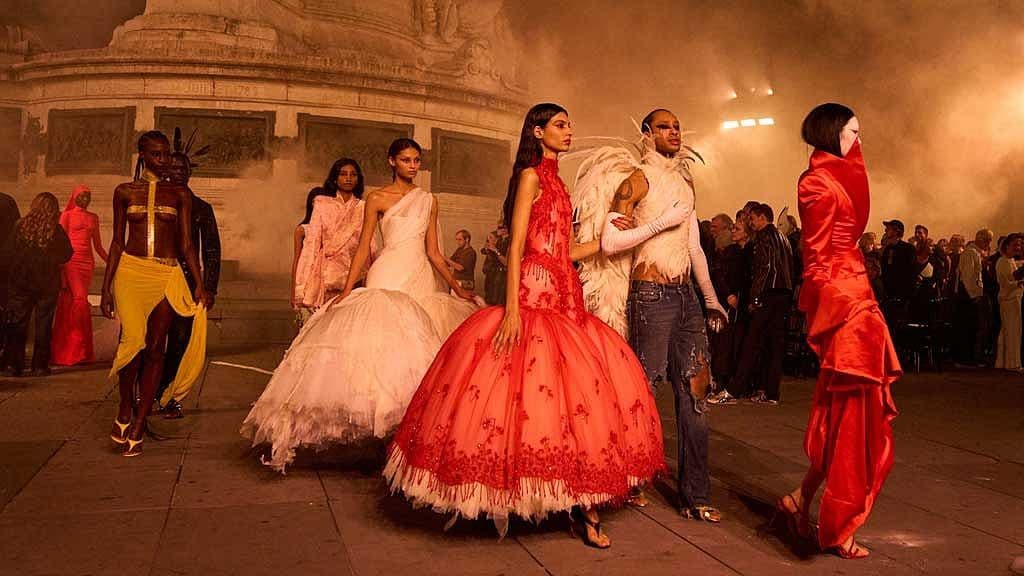
Times Square was the stage. Fifty skyscraper screens synchronized, projecting fictional Gucci products into the Manhattan sky: Gucci water. Gucci airlines. Gucci life. The irony was self-aware, and self-aware irony in fashion is a tell. A tell that says: I know this might be absurd, so I am naming it first so you cannot name it. Demna got there before the critics. It was clever. Cleverness is not the same as vision.
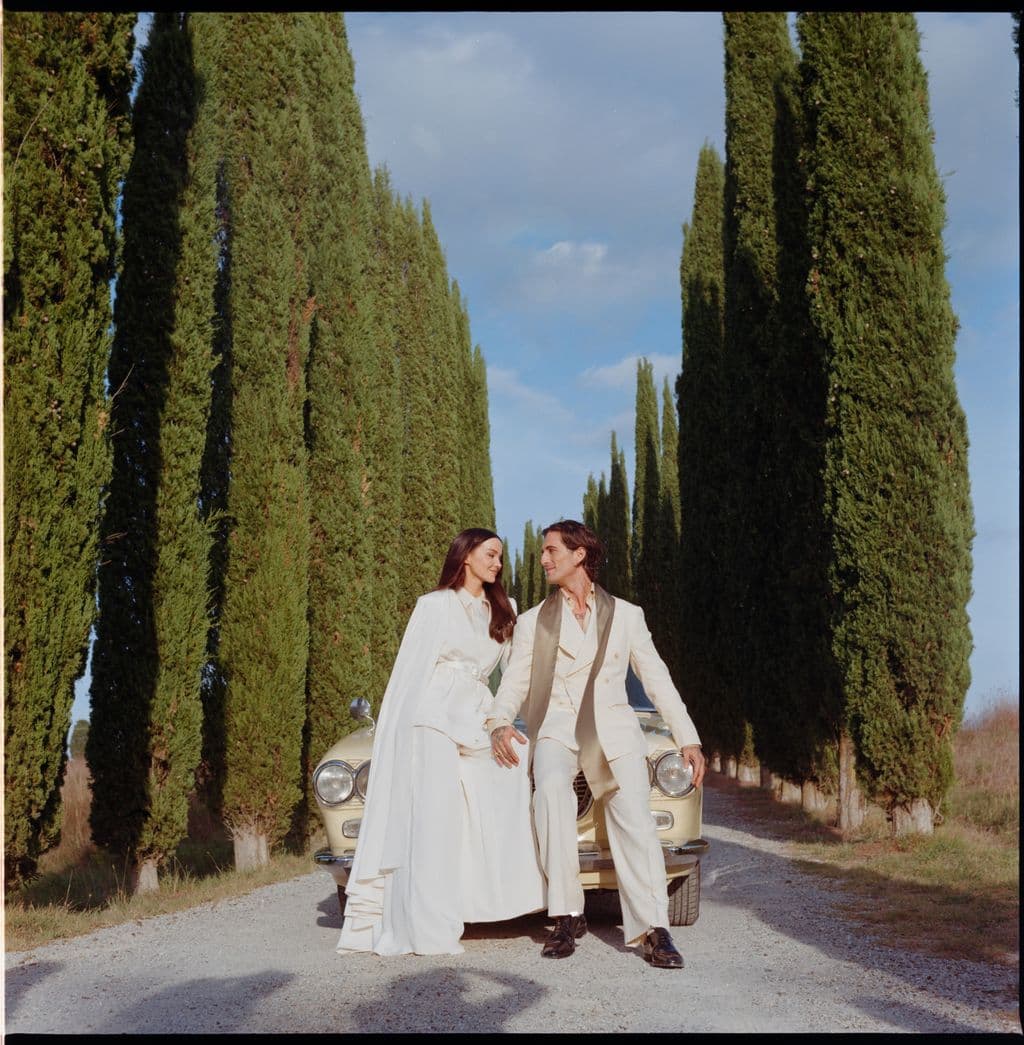
Gucci Cruise 2027, titled GucciCore, was supposed to be a return to fundamentals. Demna, now over a year into his tenure as Gucci’s creative director after the quiet departure of Sabato De Sarno, described it as building the wardrobe from the ground up. In a preview, he said: “Most of what you’ll see in this show is part of GucciCore, a permanent collection that will evolve over time, shaping my vision by building the foundation of a Gucci wardrobe grounded in pragmatic, wearable pieces that are unmistakably Gucci.” Pragmatic. Wearable. Those are retail words. They are not the words of a designer who knows what he is trying to say.
Maurizio Gucci once said: “The ones who give quality will be successful.” The question GucciCore raises is whether quality of garment is even the ambition anymore. Or whether quality of spectacle has quietly replaced it.
Let us talk about the casting, because the casting is the argument.
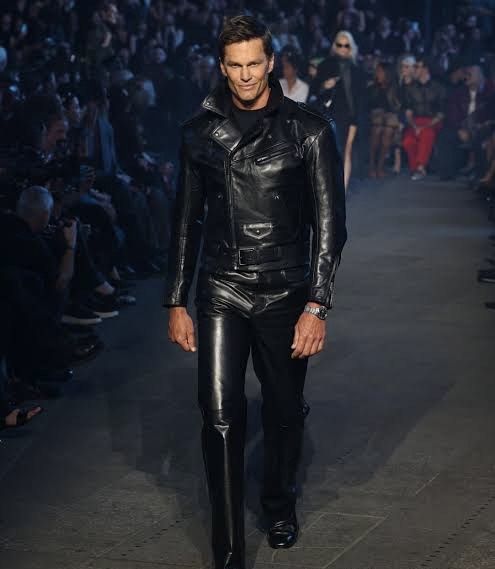
Tom Brady walked the runway. Paris Hilton walked the runway, in a brunette wig, marking her return to the catwalk for the first time in years. Emily Ratajkowski walked. Candice Swanepoel. Influencers Meredith Duxbury and Gabbriette. Gallerist Jeanne Greenberg. These are not models in the traditional sense, and Demna intended that. He said he wanted to show the clothes on “the kind of people you might pass on the street, individuals with their own way of wearing clothes.” Brady is not the kind of person you pass on the street. Brady is the kind of person who stops streets. The framing falls apart the moment you apply it.
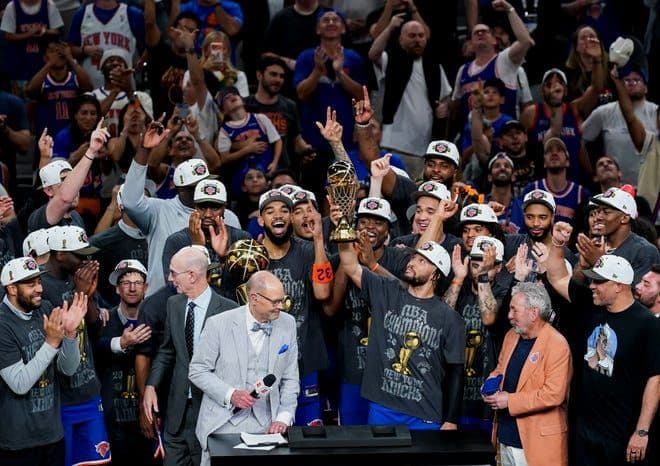
A seven-time Super Bowl champion walking a designer runway is not subversive. Not in 2026. Joe Burrow did it at Vogue World Paris two years ago. What made that moment strange and memorable was the dissonance of scale, a quarterback in a backless Peter Do suit at the Palais Royal. Brady at Times Square is sponsored content with better lighting. Kim Kardashian, Mariah Carey, Lindsay Lohan, and Shawn Mendes occupied the front row. Anna Wintour was there. The front row read like a press release. When a room full of A-listers creates zero friction, you have not achieved glamour. You have achieved a launch party.
The noise was intentional. The noise was the point. And here is the problem with that: noise covers silence. When you look past the crowd, past Brady in his leather jacket, past the synchronized screens screaming Gucci into the Manhattan sky, the collection itself needs to hold. For a show that declared itself the foundation of a new Gucci wardrobe, far too much of what walked past was quiet in the wrong way.
There were pieces that worked. They deserve to be named.
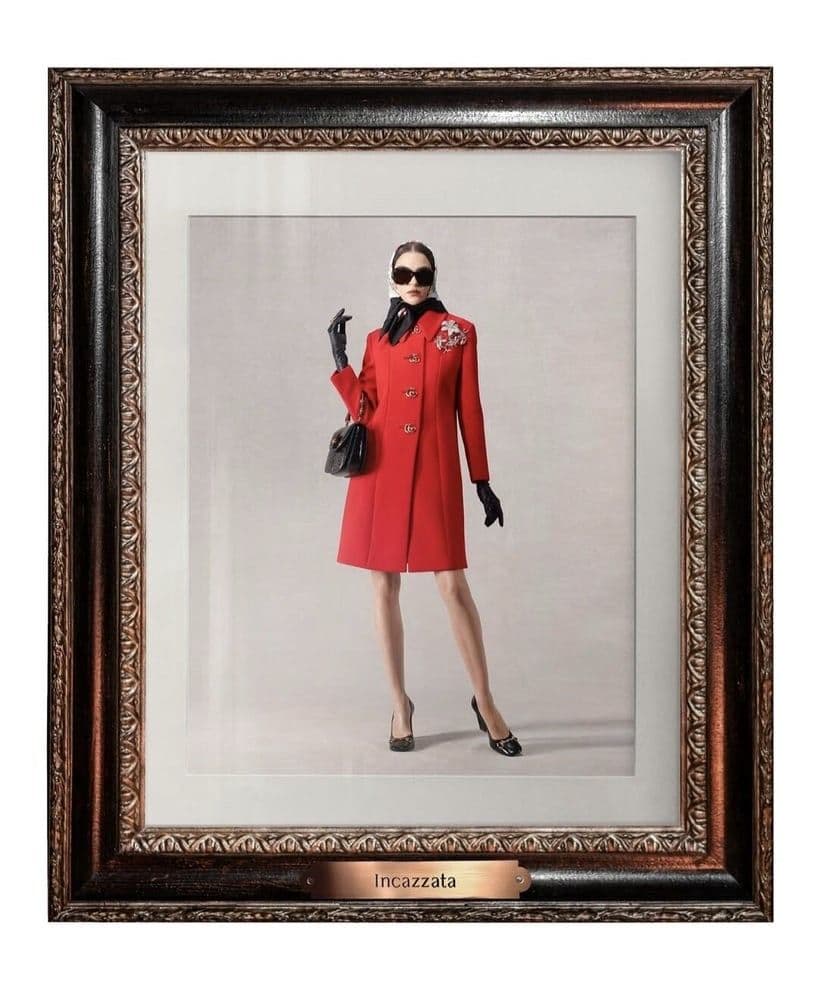
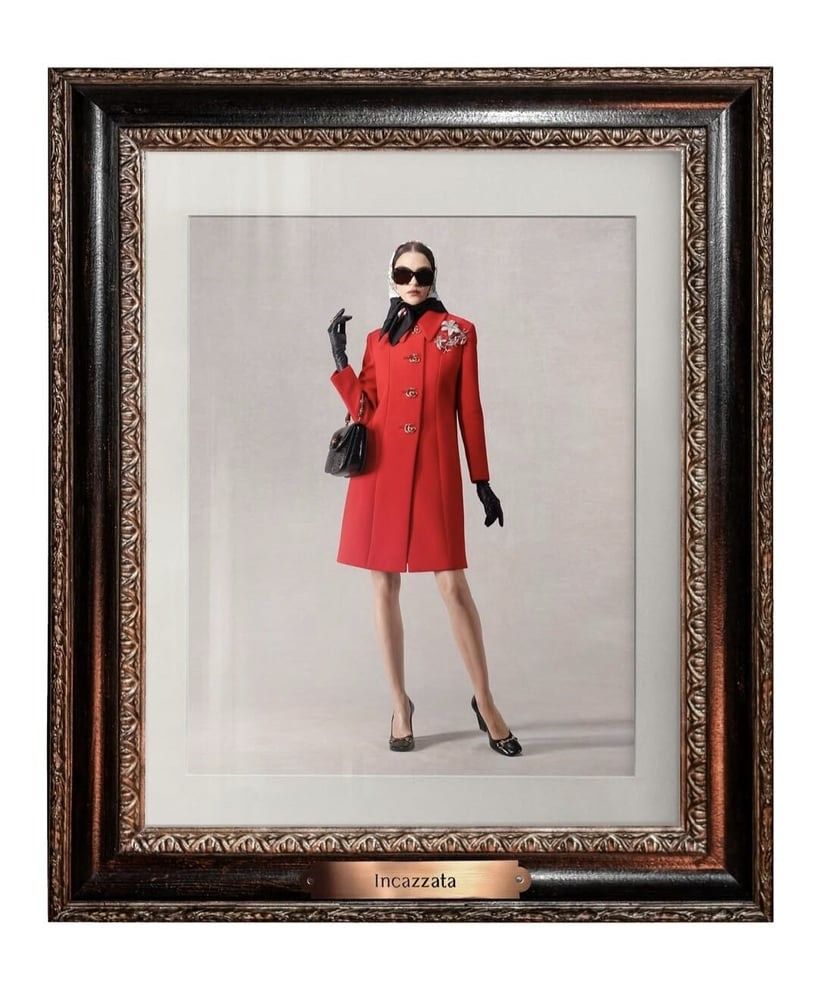
The red peacoat cut from the same English wool used for Britain’s Royal Guards was the first genuinely compelling thing to walk that runway. It had weight and it had conviction. The kind of garment that carries a story in its fabric before anyone puts it on, and Demna knew it, because he gave it its own moment. The fuchsia single-breasted shiny suit, the second exit of the show, was a perfect Tom Ford-era Gucci dog whistle. Slick, unapologetic, cinched at exactly the right place. The hand-painted Flora airlines leather coat with racing details was the most interesting garment of the night, a real piece, the kind that lives in the archive of someone’s wardrobe for twenty years. The cropped leather jacket with the matching miniskirt had a downtown urgency to it. The GG-logo stiletto pumps, with the interlocking hardware crafted into the pin-thin heels, were quietly devastating. These are the pieces that justify Gucci’s price point. These are the pieces the collection should have been built around.
Instead, they were outnumbered by safe.
Peacoats without that red wool’s authority. Trenches that could have come from any house with a trench coat. Pencil skirts so classically cut that the word “Gucci” on the label becomes the only thing distinguishing them. Slouchy denim that read more Demna’s Balenciaga circa 2022 than anything born from the Florentine workshops Guccio Gucci built in 1921. The red and green web stripe bandeau tops, the house’s signature ribbon transformed into the only real color story of the collection, got lost entirely in the crowd of celebrity bodies carrying bitten apples and stacks of books and iPhone props down the runway. Forum members at The Fashion Spot called it bluntly: “A conflicted collection, a mash-up of Tom Ford’s Gucci, and because Demna has exhausted his archives, he’s now going back to his Balenciaga rehash.” Another: “This was literally his Balenciaga Cruise New York show from a few years ago, but with Gucci-isms.” Brutal. Accurate.
Then there was Cindy Crawford.
She closed the show. The finale. The moment the whole machine was building toward. She emerged in a feather floor-length gown, white-blonde light catching every strand of it, and walked the length of Times Square alone. Technically, she was immaculate. She is always immaculate. Cindy Crawford’s walk has not changed since 1993 and does not need to. The problem was not Cindy Crawford.
The problem was what the moment asked of her. A feather gown in the middle of a collection about pragmatic city dressing is a contradiction that does not resolve into tension, it resolves into confusion. The show opened with the promise of wearable fundamentals. It closed with a Hollywood finale. The gown had nothing to do with GucciCore. It had everything to do with the optics of closing a show with a legend. Crawford was not the ice queen of this finale. She was the curtain call. The standing ovation before the reviews come in.
There is a version of this show where Cindy Crawford closes in that red peacoat. Where the final image the audience carries home is the most powerful garment of the collection worn by the most iconic body of the evening. Instead, we got spectacle where there should have been statement.
Demna told WWD: “I’m very specific, precise, almost OCD, with what I show.” That OCD specificity produced a red Royal Guards peacoat and a Flora airline leather coat that will be talked about for years. It also produced a celebrity parade that talked louder than the clothes. Both things are true. The question Gucci and Kering need to sit with is which one they want defining the house.
Fashion historian Valerie Steele once observed that Guccio Gucci was one of the first designers to understand that luxury was about more than quality. That it was about desire and dreams. The GucciCore show had desire embedded in its best pieces. But the dreams it was selling belonged to someone else’s vision. Some of them belonged to Tom Ford. Some belonged to the Balenciaga Demna built over a decade in Paris. Very few of them belonged specifically, unmistakably, irreversibly to whatever Gucci is trying to become.
That is the real problem with GucciCore. Not that the clothes are bad. Some of them are very good. The problem is that a show called GucciCore, staged in the center of the world, should answer the question of what Gucci’s core actually is. After watching it, the answer is still not clear.
And that ambiguity is not the interesting kind.