Yesterday, the news that Dolly Parton had died at 80 after a brief battle with cancer moved with the strange speed reserved for people who had long seemed permanent. Her nephew, Bryan Seaver, announced her death in a video shared by the family. A private service is planned. Today, Dollywood will open. That decision carries the blunt, loving logic of Parton's own belief that the show must go on; the White House has ordered federal flags to half-staff.
I grew up in North Carolina with a secondhand idea of Dolly Parton: the big hair, the country-star glow, the name everyone seemed to know. About five years ago, a friend mentioned Dollywood. I had to ask what Dollywood was, and the answer sent me into an internet spiral—old performances, interviews, photographs, then the songs. Her version of “I Will Always Love You” has lived rent-free in my mind ever since. Yesterday’s news made me go back to it.
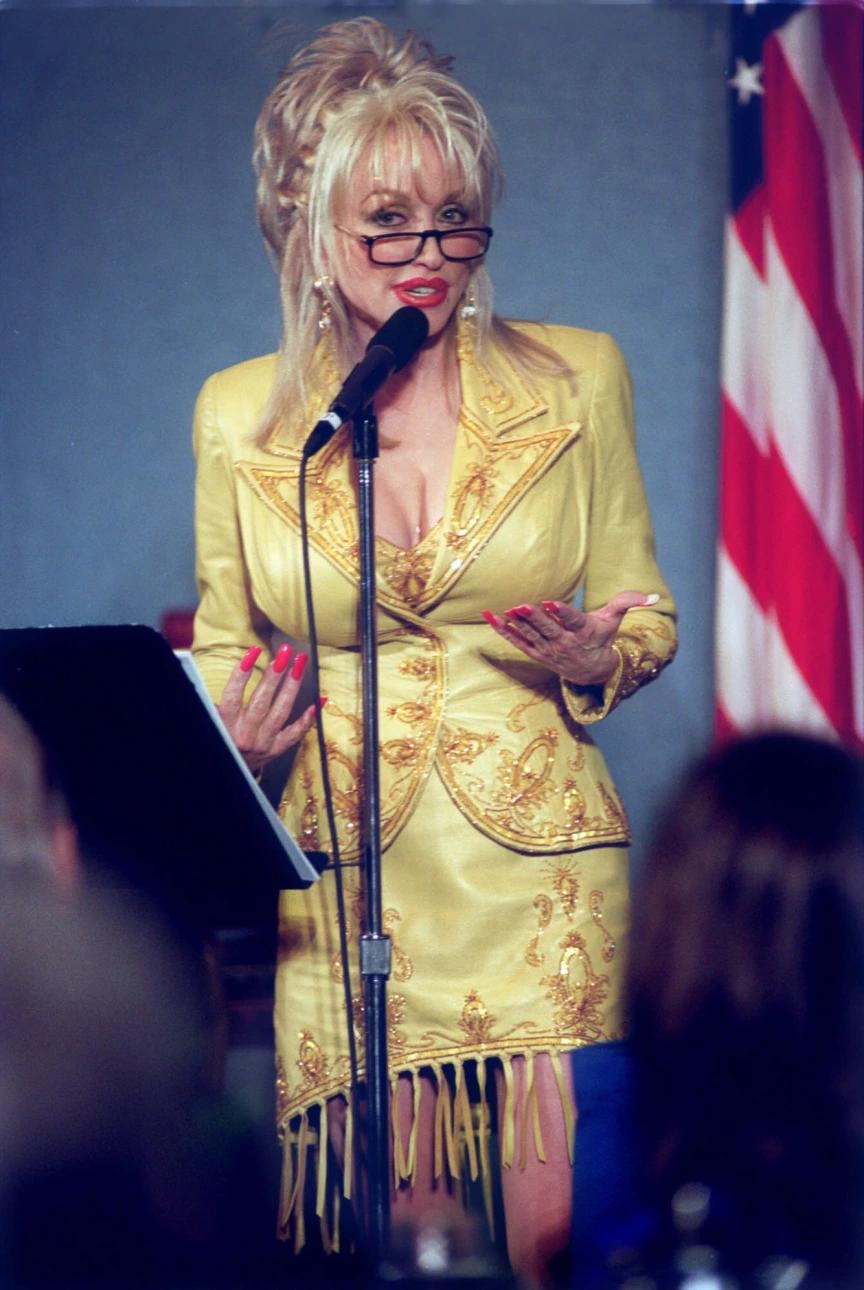
The photograph I keep returning to is from March 2000. At the National Press Club in Washington, where she spoke about her book-gifting charity, Imagination Library, Parton wore a fringed, embroidered yellow leather skirt suit with matching peep-toe heels. In the photograph from that lunch, the suit turns conference-room carpeting into a stage. It is bright enough to make bureaucratic beige look faint. It is tailored enough for a lectern. Parton came to talk about children’s books without sanding down the image that had made her unmistakable.
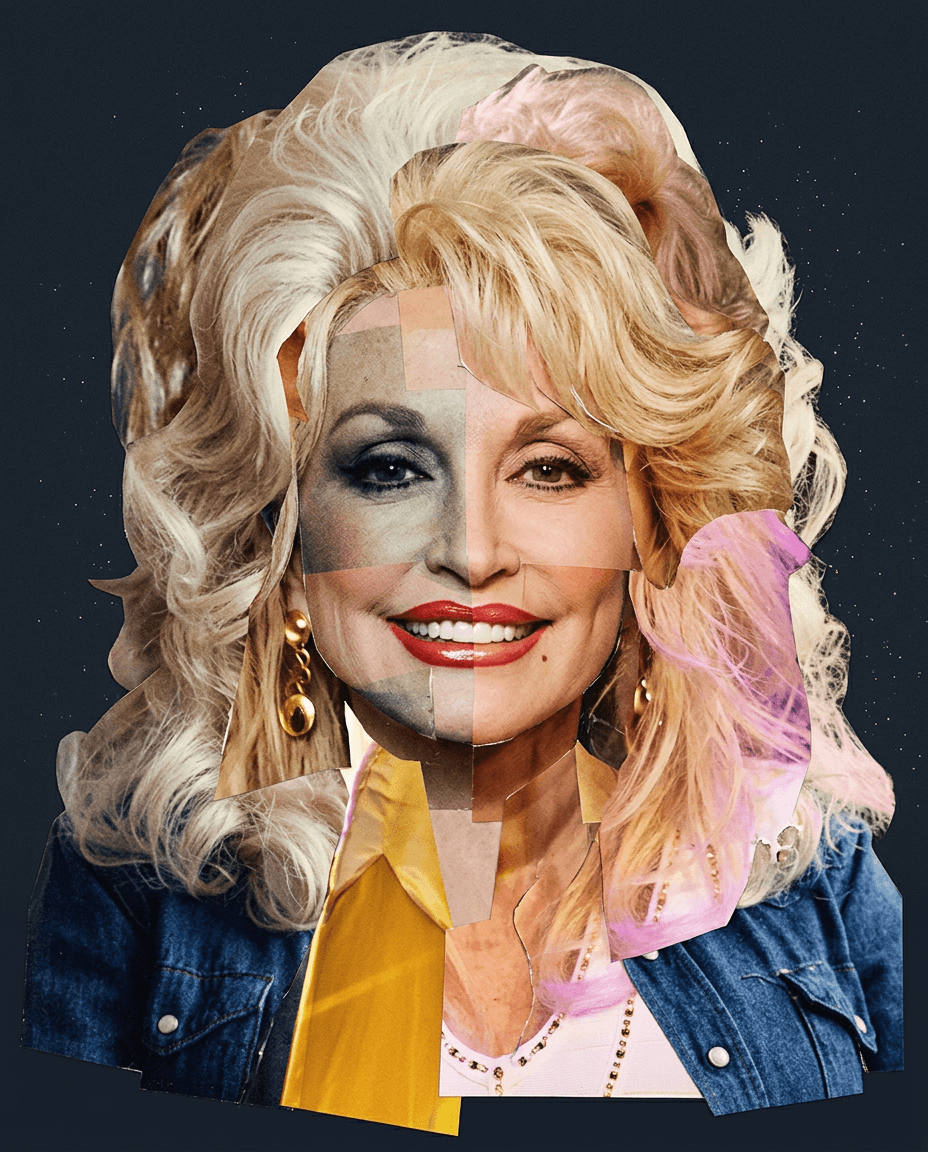
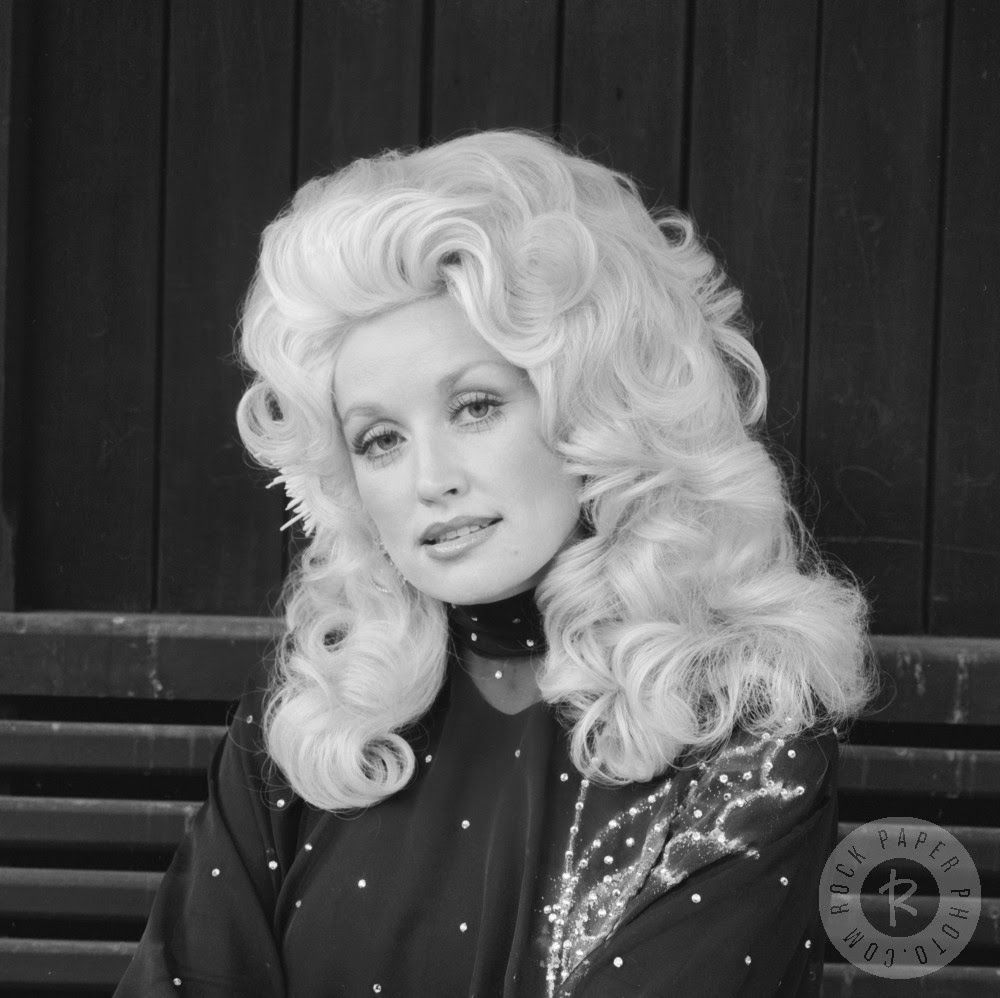
What strikes me now is how little she asked permission. The wigs, the tiny waist, the rhinestones, the high shoes: these were choices she kept making while fashion moved through its own moods. Her style had the steadiness of a signature. It could be funny, sensual, theatrical, and practical within the same look.
It was also collective work. Steve Summers, Parton’s creative director from 2006, and his team produced up to 300 custom ensembles a year; he described the formula as sparkle, colour, a cinched waist, and unmistakable Dolly flair. Before Summers, Bob Mackie made the winged “Butterfly” gown for Dolly & Carol in Nashville. Tony Chase shaped the glossy, big-shouldered glamour of her 1980s variety-show years. The collaborators knew the assignment, but Parton had written it.
Growing up in North Carolina had not made me a Dolly expert. If anything, it made the later discovery feel more personal. I could understand the regional language of her clothes—the denim, the shine, the refusal to be subtle—without immediately understanding how much intention sat behind it. The acid-wash denim and patchwork jumpsuits were sometimes a lot. They were meant to be. She wanted an outfit to register from the back row, and she wanted it to be hers.
Her songs will remain at the centre of the story. But the clothes belong there too. They were part of how she told us who she was before the first lyric landed: generous with colour, alert to humour, unwilling to shrink. That is why Parton belongs in Cohesive Magazine’s conversation about music, image, and personal style. Her wardrobe was not an accessory to the work. It was another instrument.
The yellow suit is still there in the photograph, all fringe, polish, and purpose, facing a room that had to take her seriously. So is the voice in my head: clear, steady, singing “I Will Always Love You.” Some songs do not leave you. Neither did she. We love you, Diva.