“Consumption, I am aware, is a flattering malady.”— Charlotte Brontë, 1849
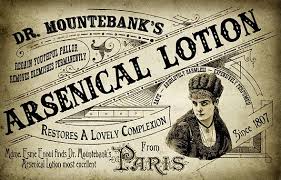
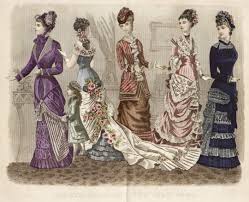
Before the Instagram algorithm, before the runway photographer, before the glossy editorial spread madelooking sick look aspirational, there was a disease that killed one in seven people in Europe and theUnited States. It hollowed its victims from the inside out. It stole the breath from their lungs, left theirskin translucent, their collarbones raised like architectural detail beneath thin fabric, their eyes too brightfrom fever, their lips flushed red. It was called consumption. And Victorian society called it beautiful.This is not a metaphor. Between roughly 1780 and 1850, tuberculosis so thoroughly saturated thecultural imagination of the Western world that its symptoms became the dominant feminine beauty ideal.Women who did not have the disease sought to emulate its effects. They applied arsenic-based cosmeticsto achieve the appropriate deathly pallor. They added drops of belladonna, also known as deadlynightshade, directly to their eyes so that their pupils would enlarge into that glassy, feverish quality. Theylaced their corsets to the point of fainting. The revealing necklines of neo-classical dresses weredesigned, in part, to show off what the disease made visible: thin necks, sharp shoulder blades, the tenderprotrusion of bone beneath wasting skin. Fashion scholars call this period consumptive chic. The termlands with a kind of grotesque precision.Carolyn A. Day, an assistant professor at Furman University whose research tracks this preciseintersection of disease and feminine beauty, documents how tuberculosis did not just parallel the beautystandards of the day but actively defined them. The desirable Victorian woman was pale and frail notdespite the epidemic, but because of it. The disease had restructured the aesthetic imagination of anentire civilization. And civilization had restructured its language accordingly. Women were not wastingaway. They were ethereal. They were not sick. They were delicate. They were not dying. They were Feminine.
There is something worth sitting with in that list of euphemisms. Ethereal. Delicate. Feminine. Thesewords did not disappear when tuberculosis lost its grip on the Western world after Robert Kochidentified the tubercle bacillus in 1882 and the disease was slowly stripped of its lethal glamour. Thewords stayed. The aesthetic stayed. The cultural machinery that transforms the signs of a suffering bodyinto an aspirational ideal stayed. What changed was the name of the disease being romanticized.In the mid-1990s, the fashion industry perfected what it called heroin chic. The look was precise: gauntfigures, hollow cheeks, shadows beneath the eyes that suggested sleeplessness or malnutrition or both,pale skin, and an overall aura that communicated radical physical depletion as aesthetic choice. Themodels who embodied this look were celebrated in the highest publications. The photographers whocaptured it won awards. And the language used to describe it was carefully, deliberately euphemistic.The models were not emaciated. They were waif-like. They were not dangerously thin. They wereangular. They were not appearing to be in physical distress. They were artistically challengingconventional beauty. The vocabulary shifted. The phenomenon did not.When President Bill Clinton condemned the trend publicly in 1997, calling it glamorizing the signs ofaddiction and disease, there was a collective exhale. For a moment it seemed as though fashion might beheld accountable for the body it was selling. The fashion industry made the appropriate noises. Heroinchic faded from the explicit cultural conversation. And then, with the precision of a recurring nightmare,it came back.

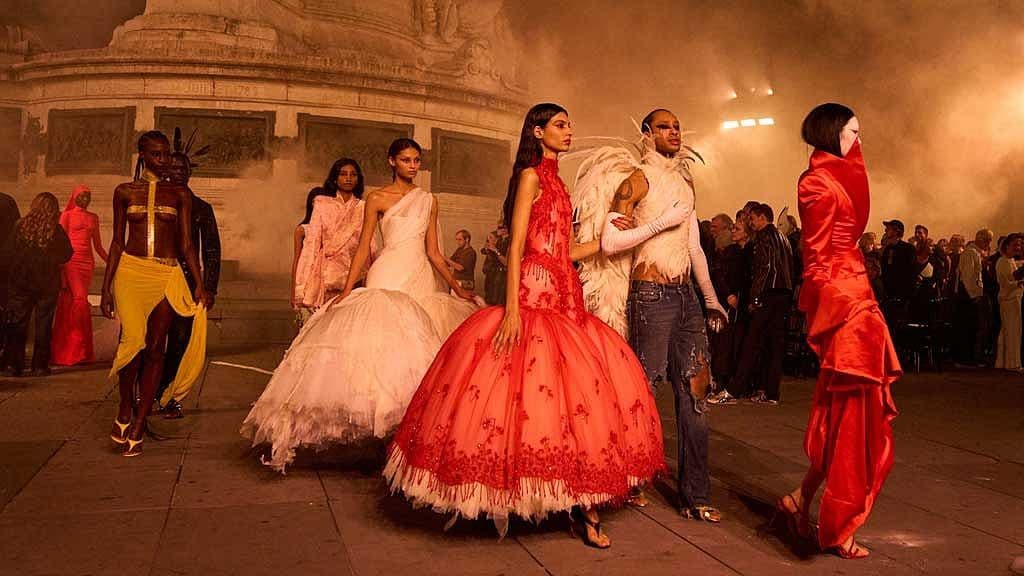
In November 2022, the New York Post declared what many had already sensed forming in the culturalundercurrent: curvy bodies were out, heroin chic was back. The backlash was immediate and ferocious,led in large part by Jameela Jamil, who wrote publicly that heroin chic had her generation in a chokeholdand that most of them still had not fully recovered. But the backlash, however justified, did not stop whatwas already in motion. At Paris Fashion Week in 2023, designers were blasted for deliberately returningto 1990s body standards. On TikTok, hashtags openly celebrating skeletal frames accumulated millionsof views before platforms moved, slowly, to address them. The cultural shift was already embedded. Theonly debate was whether to name it honestly.Then came Ozempic, and the conversation became something stranger. A medication designed for thetreatment of type 2 diabetes, semaglutide under the brand name Ozempic or Wegovy, began circulatingthrough Hollywood and the fashion industry as a weight-loss tool available to those with the means toaccess it. Its effects were visible and rapid. At Berlin Fashion Week, a controversial slogan shirt reading“I Love Ozempic” made headlines. Vogue Business, analyzing the Spring/Summer 2025 runway season,wrote that progress had stalled and that the industry was facing a worrying return to using extremely thinmodels amid the Ozempic boom. The editorial director of British Vogue, Chioma Nnadi, told BBCRadio 4 that the fashion industry should be concerned, adding that Ozempic had something to do withthe pendulum swinging back toward extreme thinness. Less than one percent of the more than 8,700looks presented during the major international fashion weeks that season featured plus-size models. Morethan ninety-four percent were between a US size zero and a four.The data from healthcare is less ambiguous than the fashion industry’s language. From 2018 to 2022,healthcare visits related to eating disorders more than doubled among people under the age of seventeen.Research published across multiple peer-reviewed journals documents that social media use, particularlyon image-based platforms, significantly increases the risk of eating disorder pathology in young people.A 2024 study found that nearly half of participants aged sixteen to twenty-five showed elevated eatingdisorder risk, with body dissatisfaction and online social comparison identified as primary drivers. Beat,the UK’s leading eating disorder charity, reported in January 2022 the highest number of supportsessions for people with eating disorders it had ever recorded in a single month. These numbers exist inparallel with the runways and the hashtags and the celebrity transformations. They are not separatephenomena.What the history of consumptive chic reveals, if we allow it to, is that the romanticization of a sufferingbody is not an accident of fashion. It is a pattern with a structure, a vocabulary, and a set of socialfunctions that repeat across centuries with unsettling consistency. Each iteration requires two things: abody that carries visible signs of illness, deprivation, or extreme physical stress, and a languagesophisticated enough to describe those signs without naming what they are.Victorian society had its vocabulary. Ethereal. Delicate. The 1990s had its own. Waif. Androgynous. Art.The current moment is developing its lexicon in real time. Ballet body. Clean eating. The wellnessaesthetic. These are not the same as the explicit celebration of heroin chic, but they occupy the samestructural position in the cultural imagination. They describe something that looks like the body underpressure, and they use language that transforms that pressure into virtue. The word wellness is doingextraordinary work right now. It is being used to describe practices that, in their clinical presentation,would be recognized as disordered. The word clean, applied to eating, carries moral weight far beyondnutrition. These words matter. Language has always been where the normalization of harmful beautystandards does its most durable work.Dr. Victoria Alexander-Thompson, whose research on contemporary beauty standards draws this line ofconnection explicitly, argues that the body standard is shifting closer and closer to starvation, and thatwhen these shifts are ignored or euphemized, the standard only becomes more normalized. The concernis not abstract. When the signs of malnourishment are held up as beauty standards and sold to youngwomen and girls, those girls will pursue those signs. Some of them will die. Tuberculosis killed one inseven people in its era. Eating disorders carry the highest mortality rate of any psychiatric illness. Thecomparison is not rhetorical. It is historical, and it is medical, and it is happening now.The fashion industry is not monolithic, and it would be a failure of nuance to treat it as a single actor witha single intention. There are designers who have fought genuinely and consistently for a broaderaesthetic. There are publications that have changed, meaningfully, how they represent bodies. There aremodels who have spoken at considerable professional cost about what they witnessed and experienced.None of that eliminates the structural tendency, documented across centuries, to frame the most extremeand physically precarious version of thinness as the most rarefied form of feminine beauty. Thattendency is older than fashion as an industry. Fashion inherited it. And fashion, to date, has not decidedto put it down.Here is what changes when we look at this honestly, without the protective layer of aesthetic language:the Victorian woman applying arsenic to her face to look more beautifully ill and the contemporaryinfluencer describing a 500-calorie day as clean eating are not separated by as much cultural distance aswe prefer to believe. The technology differs. The drug differs. The platform differs. The fundamentalmechanism, by which a body in distress is coded as a body to aspire to, has not changed in two hundredyears. It has simply updated its terminology.Charlotte Brontë wrote in 1849 that consumption was a flattering malady. She was not celebrating it. Shewas documenting, with precision, the absurdity of what her culture had decided to call beautiful. Shewatched her sisters die of tuberculosis. She knew what consumption actually was. The flattery wasalways the lie.The language of flattery is still the mechanism. Calling starvation wellness. Calling dangerous thinnessthe ballet body. Calling the return of size-zero runways a natural pendulum swing. Calling an eatingdisorder a discipline. The words do the work that the imagery alone cannot accomplish. They make theharmful legible as desirable. They make the dangerous feel like a choice. And they make the women andgirls who cannot achieve these standards feel, very specifically, like the problem is theirs alone.What a different conversation we might be having if we had, at any point in the last two hundred years,refused the language. If the Victorian press had called the arsenic and the belladonna and the faintingcorsets what they were. If the fashion press of the 1990s had used the word malnourishment instead ofwaif. If the current industry commentary used the phrase eating disorder risk instead of ballet body. Notto shame. Not to police. But to be accurate about what is being asked of women’s bodies and what thecost of that asking has always been.Consumption killed one in seven people in its era and was called ethereal. Heroin chic arrived in thenineties and was called art. Now the language is wellness and clean and Ozempic-lean. The wordschange. The women are still being asked to disappear.We should be able to name that by now