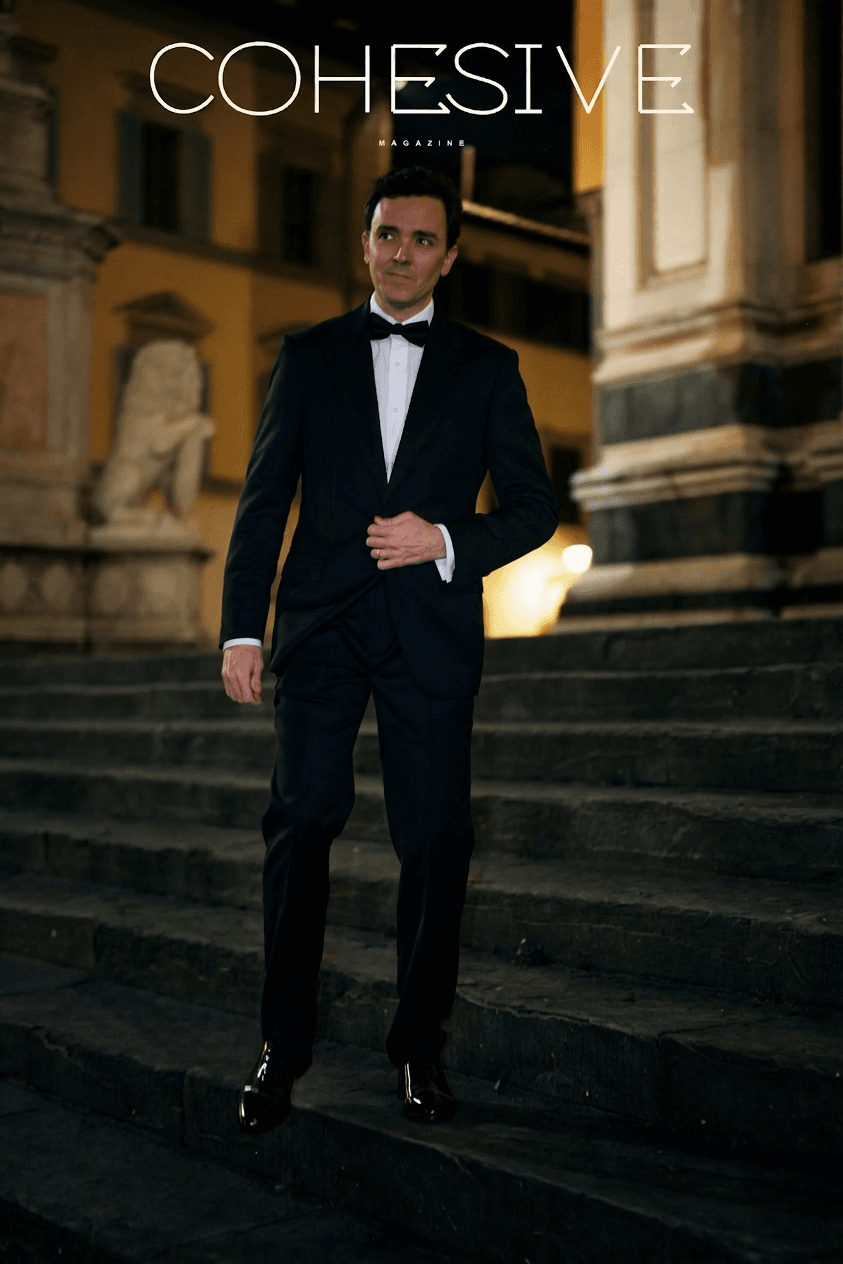
On the morning Alberto Gil got married, his closest friends lined up beside him in morning coats, and every one of those coats had been cut by his company. I had asked whether any single order, out of more than a million, still got to him. I expected a celebrity client, or maybe a soldier’s dress uniform, the kind of story a brand keeps in a drawer for interviews. He chose his friends. “Seeing a bunch of guys I’ve known for years looking sharp, comfortable, and elegant in clothes we crafted ourselves was deeply rewarding,” he says. It was one of the few moments, he adds, “where what we built on paper intersected with real life in the best possible way.”
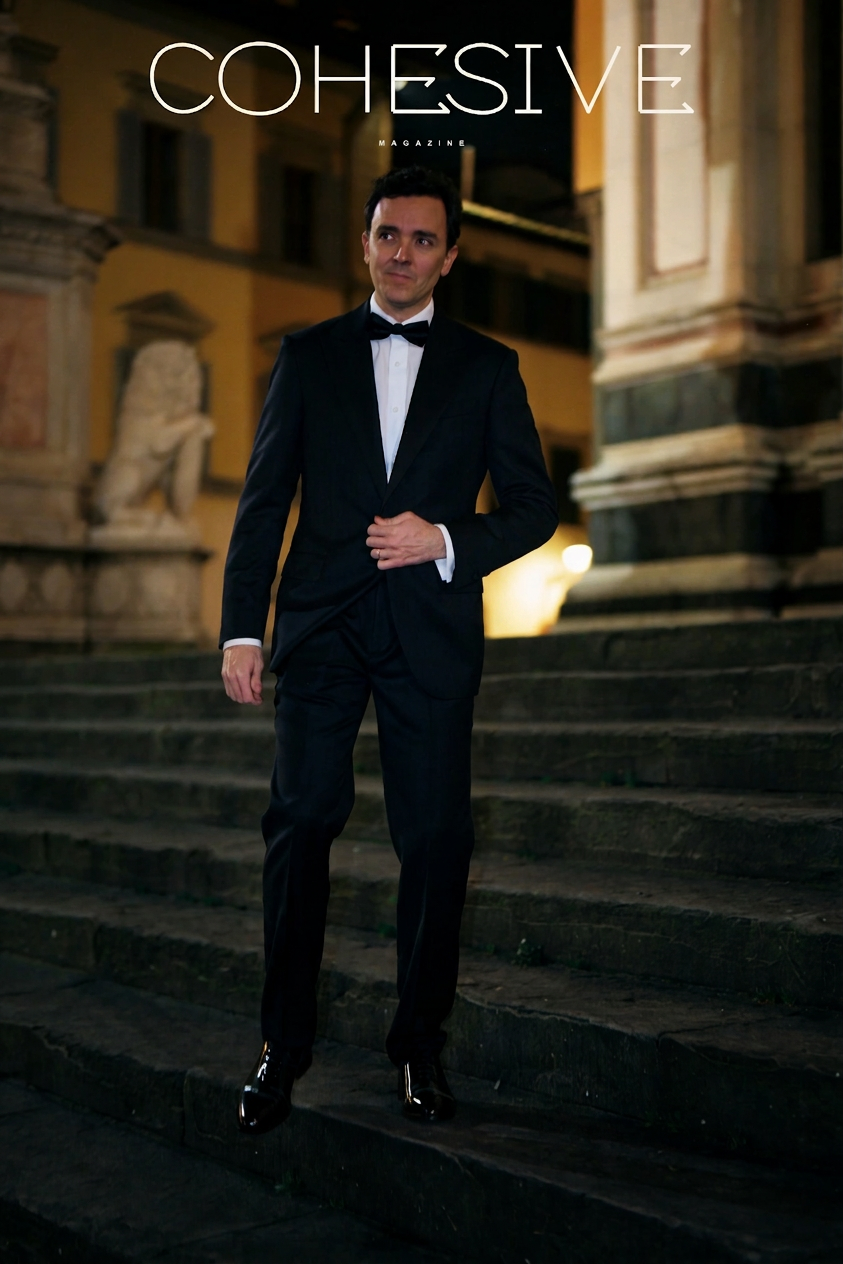
Gil is eighteen years into Hockerty, the online made-to-measure menswear company he started in 2008 with two friends, Humbert Codina and Andreu Fernández. Back then it was called Tailor4Less. It now sits alongside a womenswear label, Sumissura, and the two brands have reported combined revenue of around €20 million, with customers in 81 countries. Gil trained as an engineer. He speaks about shoulder slopes the way other people speak about the weather.
And the oldest thing in his wardrobe, the piece he still actually wears, is a faded Captain America T-shirt from university.
“There is a quiet irony in a custom tailoring founder holding onto a worn graphic tee,” he says, before I can say it for him. The shirt has survived every closet clear-out since. Pulling it on, he says, takes him back to the person he was in his early twenties, “long before supply chains, sizing algorithms, and spreadsheets.”
I liked him for that straight away. Most founders, asked about the oldest thing they own, find a way to make it about the product.
The early story has been told so many times that Gil has grown a little tired of it. Three friends from Barcelona in their early twenties pooled €10,000, worked out of a bedroom, and sent one of them to China. Andreu was the one who got on the plane. The plan rested on a single impressive experience: a garment tailored in Shanghai that fit better than anything they could buy at home. The catch was that you had to fly there to get one.
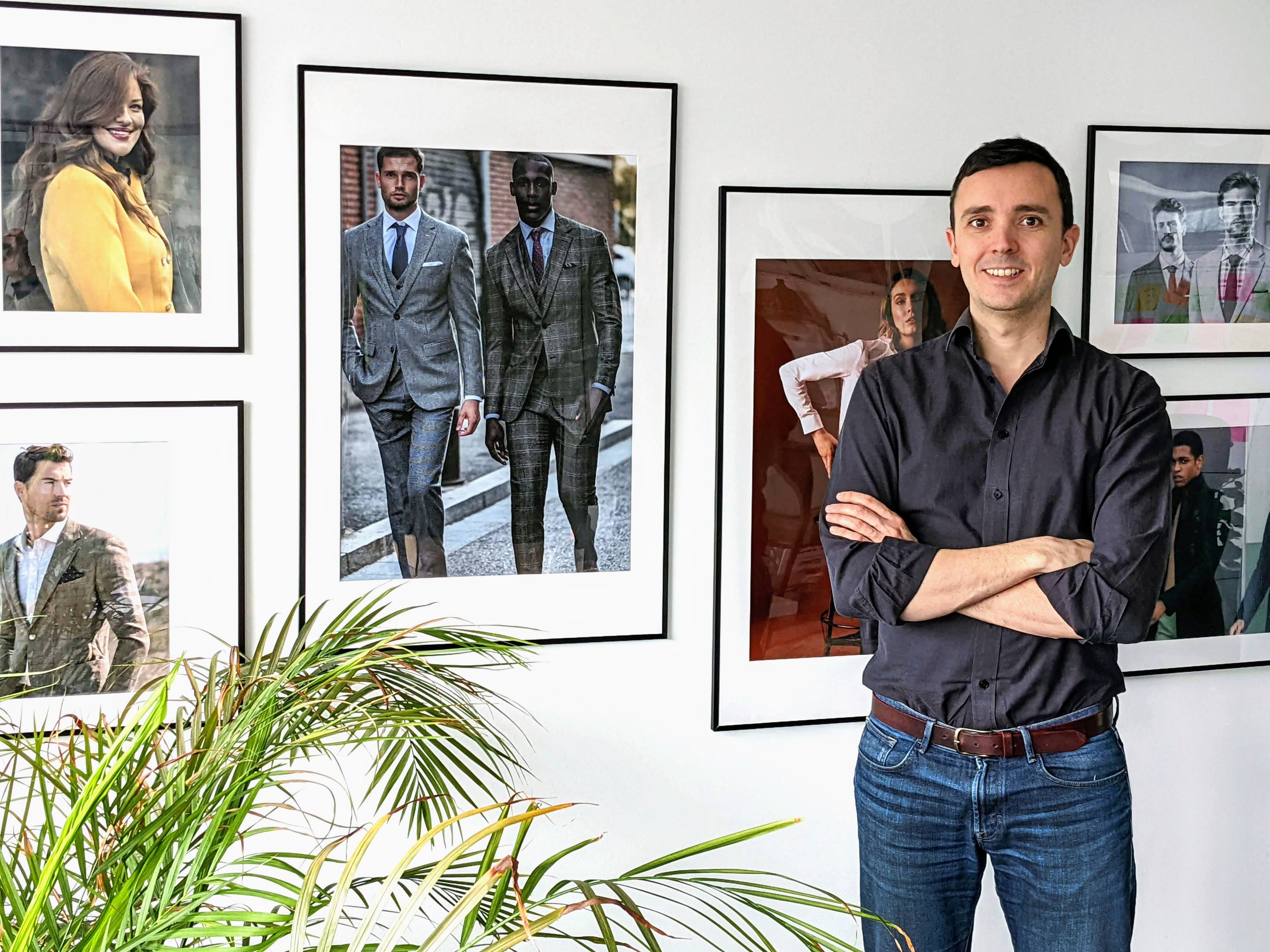
They knew almost nothing about suits. Gil thinks they had each ordered one made-to-measure suit locally, at most. Canvassing and drop ratios meant nothing to them, and neither did the mechanics of a textile supply chain. “Looking back, our ignorance was our shield,” he says. “Had we known how complex global textile manufacturing really was, we probably would have stayed home.”
Shanghai, as the company likes to point out, has been making bespoke suits and shirts by hand since the late nineteenth century. Finding the right workshop on that first trip was, in Gil’s words, “pure, unrepeatable luck.” They still work with the same partner today. For two decades this industry has chased the cheapest available needle from one continent to the next, so that kind of loyalty means something.
The loyalty didn’t make them rigid. The pandemic forced them to spread production quickly, and Gil counts it among the hardest stretches the company has been through. These days its staff work across Zurich, Barcelona, Toledo and Shanghai.
I asked whether there was a part of those first years he had stopped telling people about. I was braced for a near-bankruptcy.
“Honestly, we probably lean too much on the ‘bedroom and €10,000’ story,” he says. “It starts to feel too far away, and in a way, it flattens the reality.” They found customers early, he admits, so there was never a week when the whole thing nearly collapsed. What the tidy version leaves out is how long the uncertainty lasted. Every hour went into a project with no real sign it would ever pay them back. He remembers answering customer emails deep into the early hours, then doing it again the next night. A lasting company, he says, comes down to “the relentless, quiet effort you put in when nothing is guaranteed.”
Fashion loves a founding myth more than almost any other business. Hermès still trades on a Paris harness workshop from the 1800s. We’ve written about how even that story starts to change once it gets loud enough for everyone to read. A founder who volunteers that his own myth is a bit thin is unusual. I believe him more because of it.
The engineer and the tape measure
Ask an engineer how a suit gets made and you will get a flowchart.
Here is Gil’s. A customer types his measurements into the site, and before anything else the system checks whether the body he has described could exist. Human proportions are more predictable than we like to think. If a man’s chest is one figure and his shoulders are another, his neck will almost certainly fall within a narrow range. When someone enters a body that geometry doesn’t allow, the system flags it. Once the numbers pass, they are combined with his fit preferences and turned into an individual digital pattern, which is laser-cut before a tailor ever touches it.
Then I asked what eighteen years of men’s real numbers had taught him about men.
“Men are often unreliable when measuring themselves,” he says. “People tend to enter the waist they wish they had, or pull the measuring tape so tight they can barely breathe. Our algorithms literally had to learn how to account for male optimism.”
That line stayed with me for days, partly because of something he said earlier this year. Asked for his best advice to young founders, Gil told them to be brutally realistic in their business plans and to stop kidding themselves that a market exists just because they want it to. So the man who preaches against wishful thinking has spent close to two decades building software whose job is to catch it. And the software is gentle about it. It quietly lets out the waistband so you can eat dinner.
I find that genuinely moving, and I don’t think it’s a small thing. Plenty of brands profit from the distance between the body you have and the body you want. This one built its machinery to close that gap without making you feel it.
His conclusion, after all those numbers, is blunt. “Standard off-the-rack sizing is a fiction,” he says. “There is no ‘standard’ human body.” For a century, he argues, the industry has bent bodies to fit templates when it should have bent the templates to fit bodies.
Whose bodies taught the machine
I asked the next question for personal reasons, and I told him so.
Many of the people who read Cohesive come from the diaspora. In our families a good suit was protection. You wore Sunday clothes to church, to the embassy and to the funerals that mattered. Off-the-rack never fit all of us, and I mean that literally: shoulders cut for some other frame, sleeves ending where a stranger had decided an arm should end. So when his sizing system was learning what fit meant, whose bodies was it learning from?
I’ll admit I wanted him to name us.
He didn’t. “Honestly, we weren’t looking at any specific body type, because trying to classify human bodies into categories is nearly impossible,” he says. The team could have leaned on Body Mass Index and worked outward from the higher numbers, and he thinks that would have been a mistake. “BMI tells you absolutely nothing about how to get a good fit.” The system cares about shoulder width, arm length, the shape of the stomach and posture. The only way to learn those was to feed it real measurements from as many different people as possible, starting on day one. That meant thousands at first and millions now, with no standard mannequin anywhere in the process.
“The more diverse our customers are,” he says, “the more precise our measurement estimator systems become for everyone.”
My first reaction was disappointment. My second, a few days later, was closer to respect. A system that refuses to put you in a category before it has your numbers is treating you better than most of us were treated by the rack. But his own sentence carries a warning. A machine that learns from its customers can only be as wise as its customer base is wide, and if our bodies aren’t in the data, the data can’t learn them.
There’s also something the industry rarely says out loud. For many of our families, made-to-measure was never a novelty. From Lagos to a back room in Peckham, there has always been a tailor with a tape around their neck who knew your mother and kept your measurements in a notebook, in pencil. We’ve written about what Nigerian fashion is worth and who gets paid for it. What Hockerty is attempting is that same relationship, offered to strangers in 81 countries at once. I’ll be watching to see whether something that personal survives the scale.
In practice, the model runs backward from the rest of fashion. Ready-to-wear makes the clothes first and hopes someone buys them. Hockerty and Sumissura make each piece only after it has been ordered, so there is no warehouse of unsold stock to burn or discount. That puts them on the right side of the industry’s long reckoning with overproduction. At Sumissura, the company’s position is that sizes simply don’t exist, because everything is made to measure on demand. The range has also spread well past suiting. The group says it halved the average production time for its made-to-measure jeans, from 26 days in 2021 to 13 by 2023 and 2024.
When Hockerty signed Saúl Craviotto, Spain’s most decorated Olympian, as an ambassador, Gil made a point of saying the canoeist would wear the clothes because he wanted to, and that no contract would make him. It’s a small detail. It also fits everything else he believes about clothes, which is that they only work if you forget you’re wearing them.
He isn’t claiming a website will replace the person who measures you by hand. Earlier this year he said the company is actively exploring more physical retail, to bring the made-to-measure experience into the real world. Even the internet’s tailor, it seems, wants a fitting room.
What it cost
I asked what he gave up for all this. He corrected my arithmetic first: the company took the second half of his twenties and all of his thirties.
“I wouldn’t call it a dramatic sacrifice,” he says, “but after eighteen years, it is genuinely difficult to separate the company from who you are.” He tries not to talk about work at weekends. It only helps so much. “You don’t really switch it off at 6 PM; it’s simply baked into how you think.”
My last question was a strange one. Imagine it’s 2046, and a stranger finds an old Hockerty jacket at the back of a wardrobe. What does Gil hope that person can still feel in it?
“I hope he feels that it was a well-lived garment,” he says. He has no interest in a museum piece sealed in plastic. He would rather it showed that somebody wore it, celebrated in it and enjoyed having it on.
“And honestly? I hope he reaches into an inner pocket and finds something the owner forgot there. An old ticket, a business card, or a folded note. To me, that’s the best sign that a piece of clothing actually did its job.”