"Asò l'a kí, kí a tó kí ènìyàn."
(We greet the cloth before we greet the person.) Yoruba proverb
If you have ever tried to talk your way into a Nigerian party you were not invited to, then chances are you already know the truth before the bouncer does. Nobody is checking your name against a guest list. They are checking your cloth.
There is a name for the person who does this on purpose. Mogbomoya, some call them, a guest who senses a party (how kids can sense that the adults are eating), buys the exact fabric the family chose for their aso-ebi, books a tailor within the week, and shows up carrying a gift large enough that nobody asks too many questions. The ushers, uncertain, tend to seat this person close to the high table rather than risk the embarrassment of turning away someone who might, after all, be a second cousin nobody remembers. The cloth does the vouching. The person just has to wear it well.
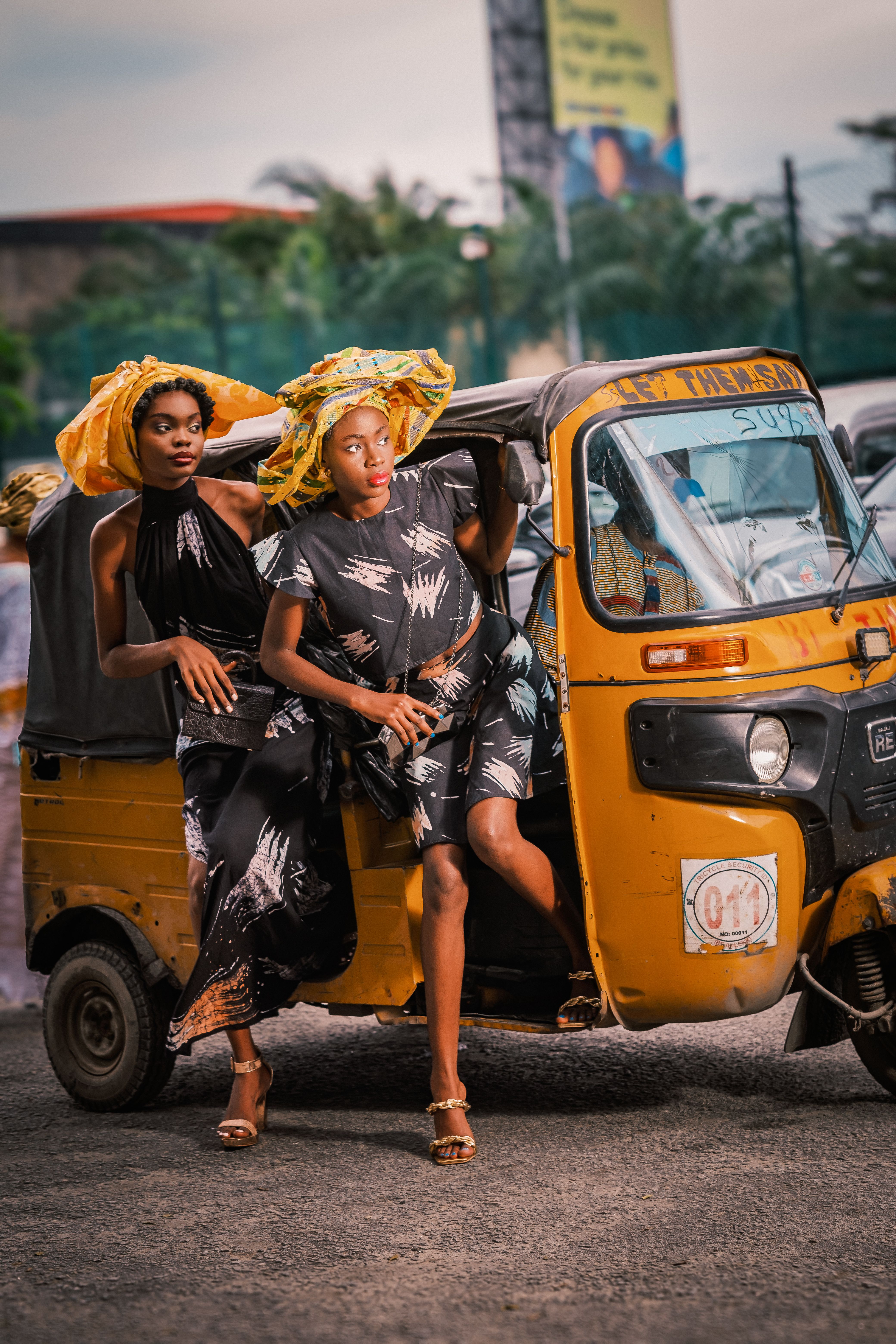
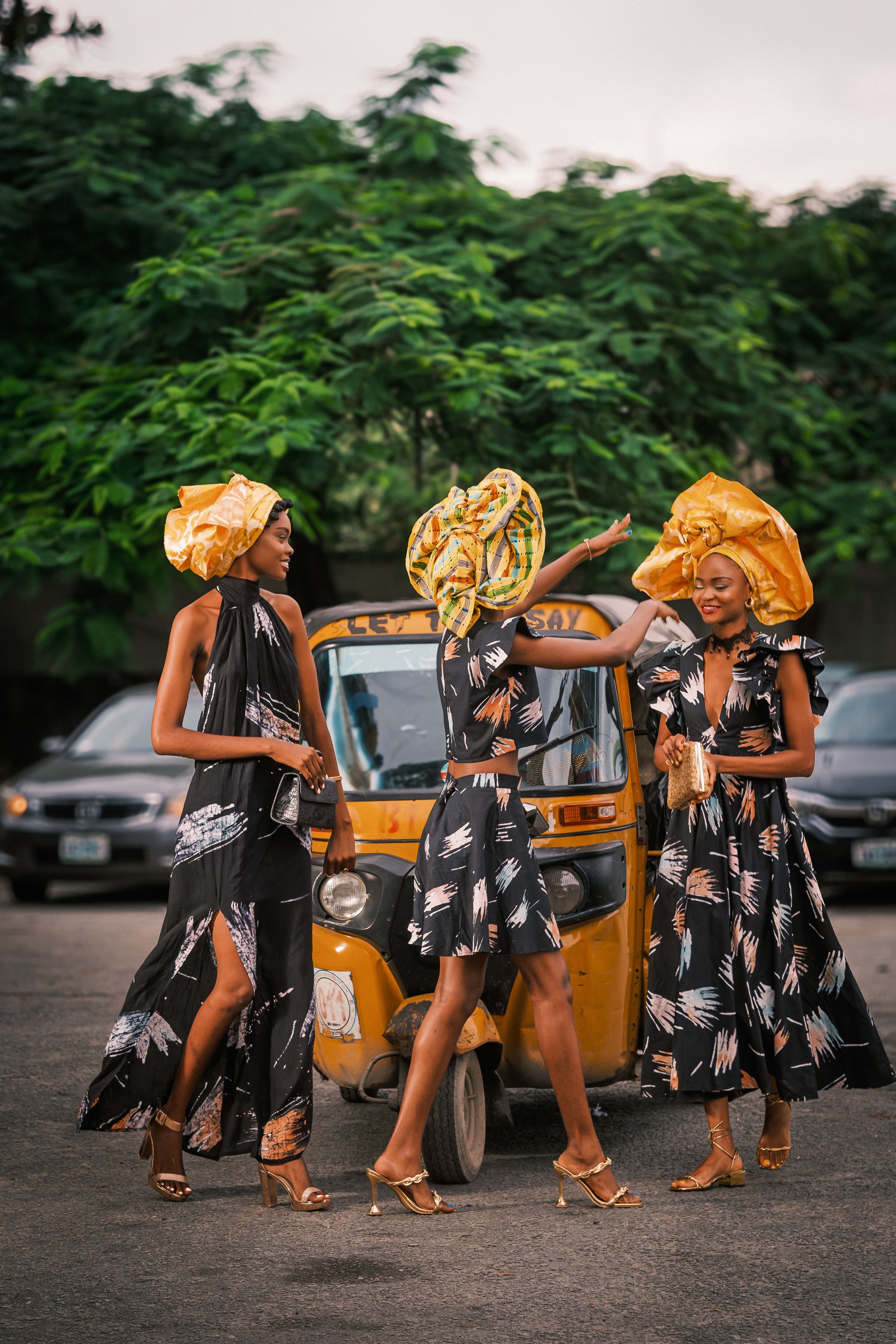
This is the exact tension the brand built an entire photo series around, dressing his models head to toe in Busayo and sending them into the middle of real Lagos parties, real drummers, real folding chairs, real strangers who have no idea a fashion story is happening three feet away from their table. The clothes are the whole plot. Everything else, the tricycle rides, the street corners, the flower arrangements taller than the women standing under them, is just the set the clothes get to perform on.
Busayo Olupona built the label these women are wearing out of the same fabric she was once mocked for. Growing up in Davis, California, in prints her mother brought back from Ife, she remembers being teased for her hair, her cloth, her accent, all of it at once. "From my clothes to my hair, to the way I spoke, I was bullied for it all," she has said. She spent six years at an elite law firm before she let herself start over as a designer, apprenticing under a master dyer in Nigeria rather than approximating the technique from a distance, and the brand she built afterward treats adire less as a print than as a lineage that happens to be wearable.
That lineage runs back to Abeokuta, a city of hills and rock outcrops in southwestern Nigeria where Yoruba women perfected the craft in the nineteenth century. Adire which translates roughly to tied and dyed, and the women who made it were not decorating cloth so much as negotiating with it. Cotton was folded, stitched, or painted with a resist, sometimes raffia bound tightly around handfuls of cloth, sometimes a paste of cassava flour worked in with a chicken feather, before being dipped again and again into vats of fermented indigo until the untouched fabric held a blue so deep it read almost black. A single well-made cloth could take twenty-five dips to get there. In 1949, when Funmilayo Ransome-Kuti organized thousands of Abeokuta's market women to march against colonial taxation, she dressed them in adire on purpose, so that a market trader and an educated elite would be impossible to tell apart in a crowd the authorities were trying to sort into leaders and followers. The same cloth that took a week to stain a woman's hands blue was, for a little while, a way of making everyone equally unreadable.
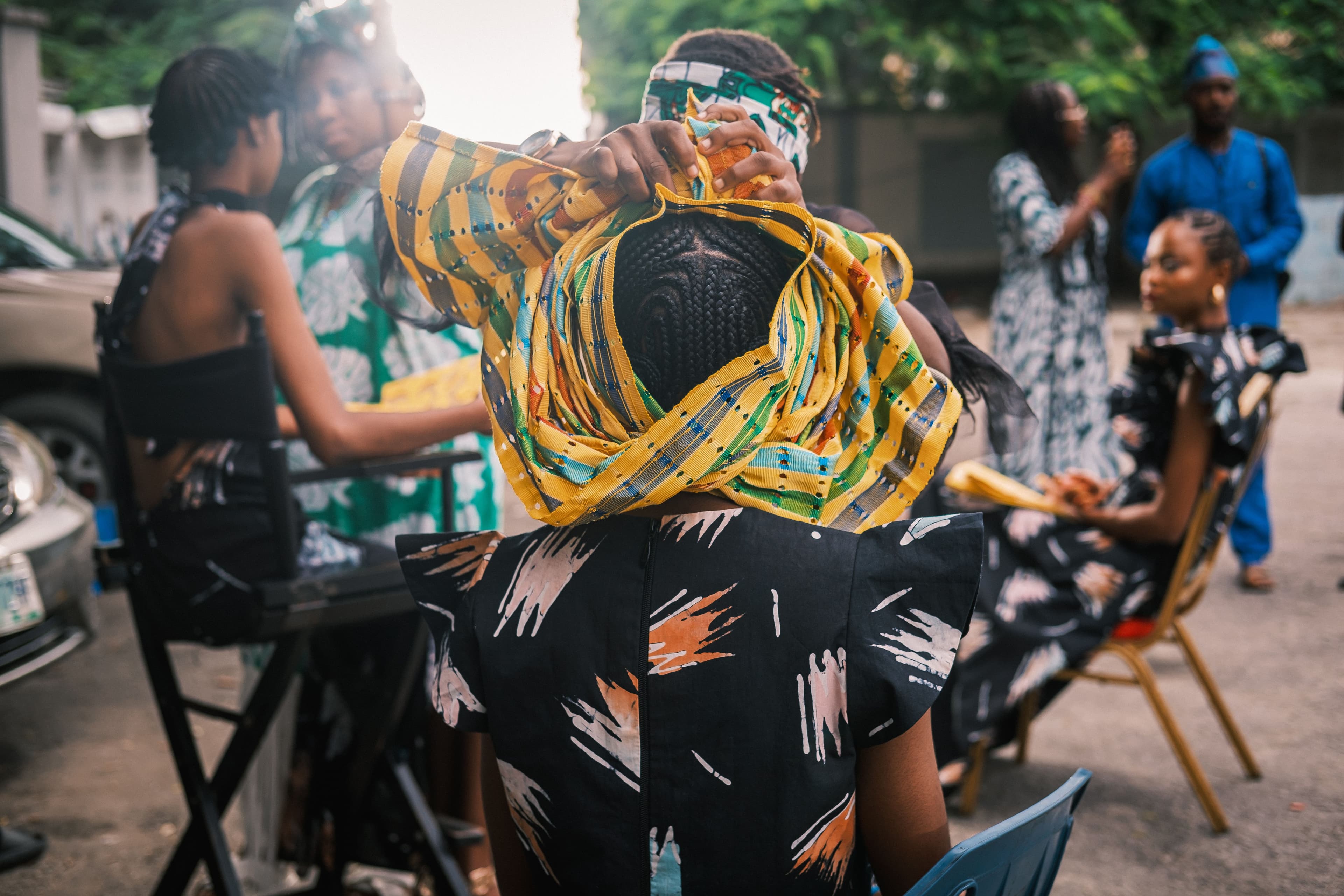
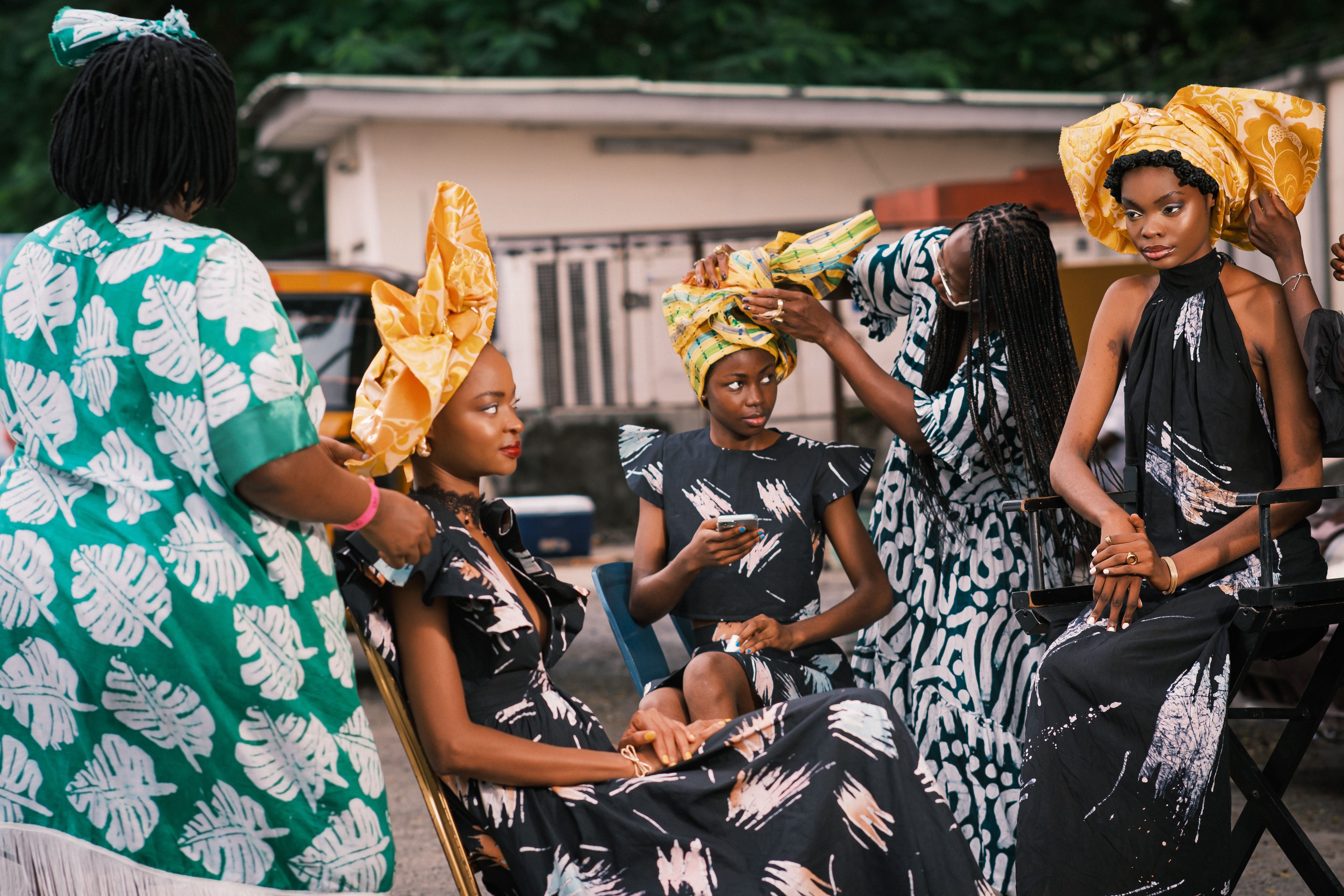
Backstage, before any of this reaches a party, two women in leaf-print boubous work a length of gold silk into a headwrap the size of a hat, twisting and tucking with the concentration of someone solving a puzzle with their hands. The model underneath sits still in a black dress splashed with white paint marks that look, deliberately, like they landed there by accident. Around her, more models wait their turn in director's chairs, phones in hand, one gele already finished and glowing like a lantern against the green behind her.
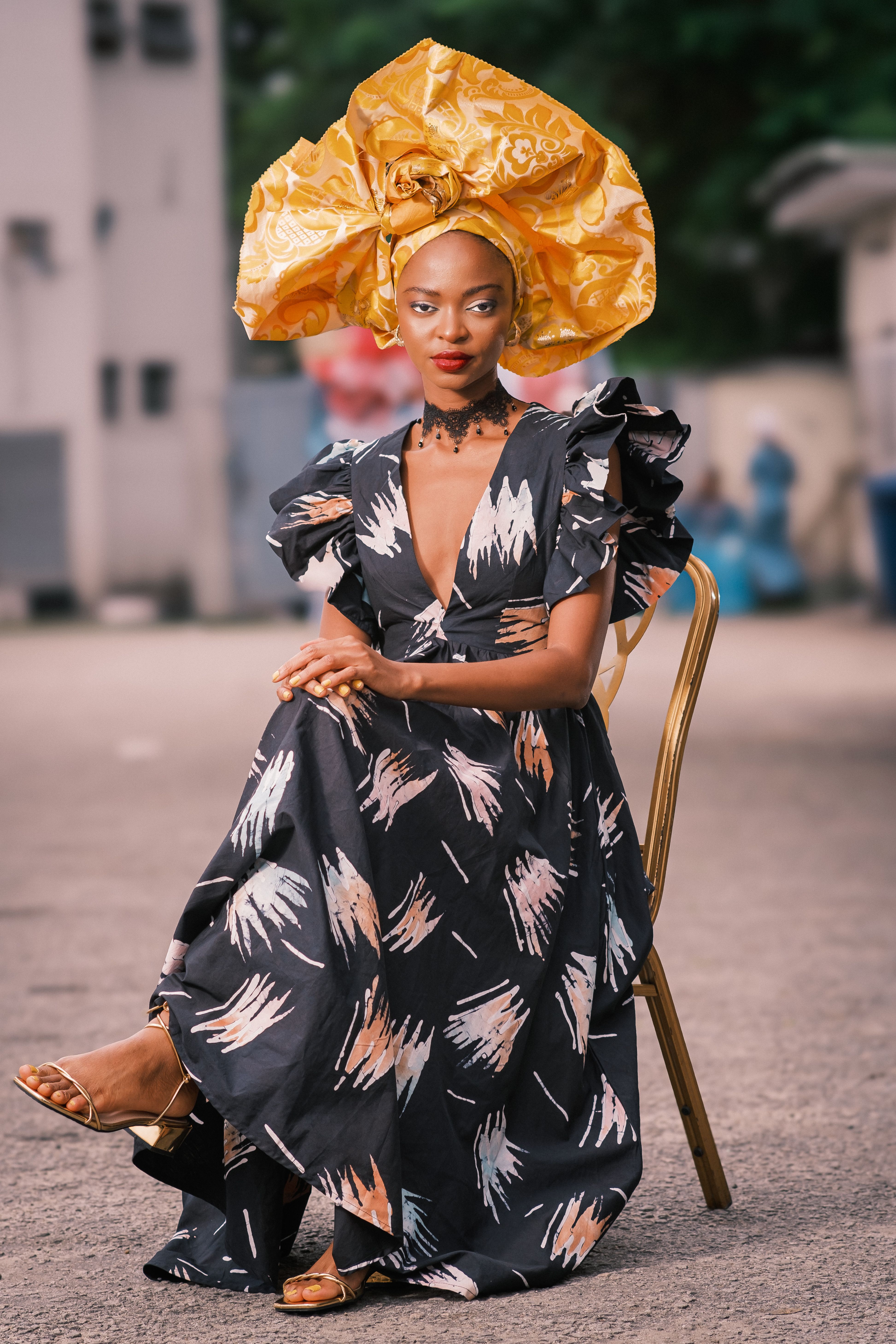
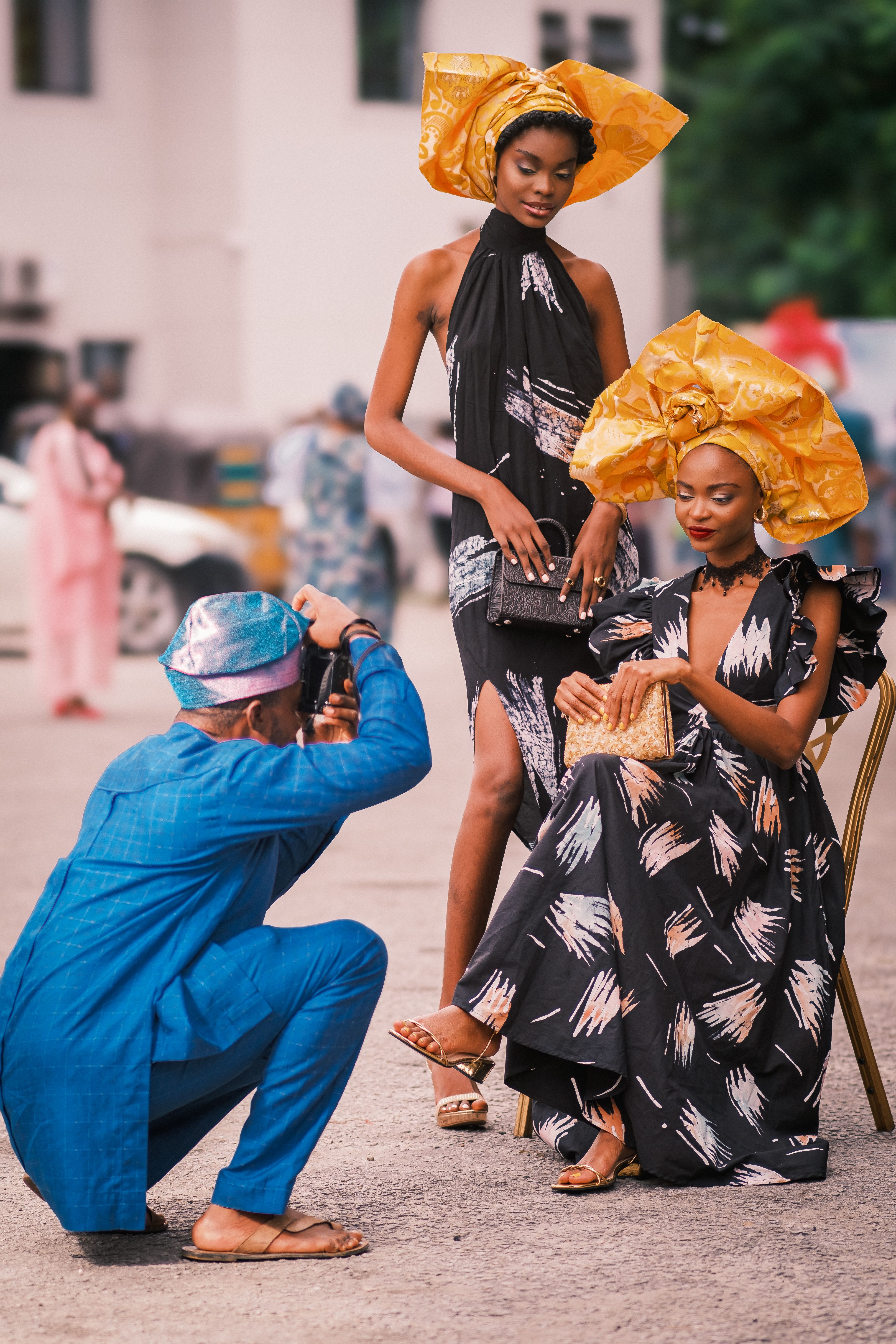
By the time they are folded into the back of a battered orange keke napep, the gold is doing most of the talking, filling the frame the way a held note fills a room. One woman's face catches a shard of afternoon light while the rest of her sits in shadow, red lipstick the only other bright thing on her. Out on the street, two men in white and a third in a striped cap stop them to talk, phone already out, the kind of conversation that could be permission or could be trouble, and either way the women wait it out in their tie-dyed black dresses without breaking stride.

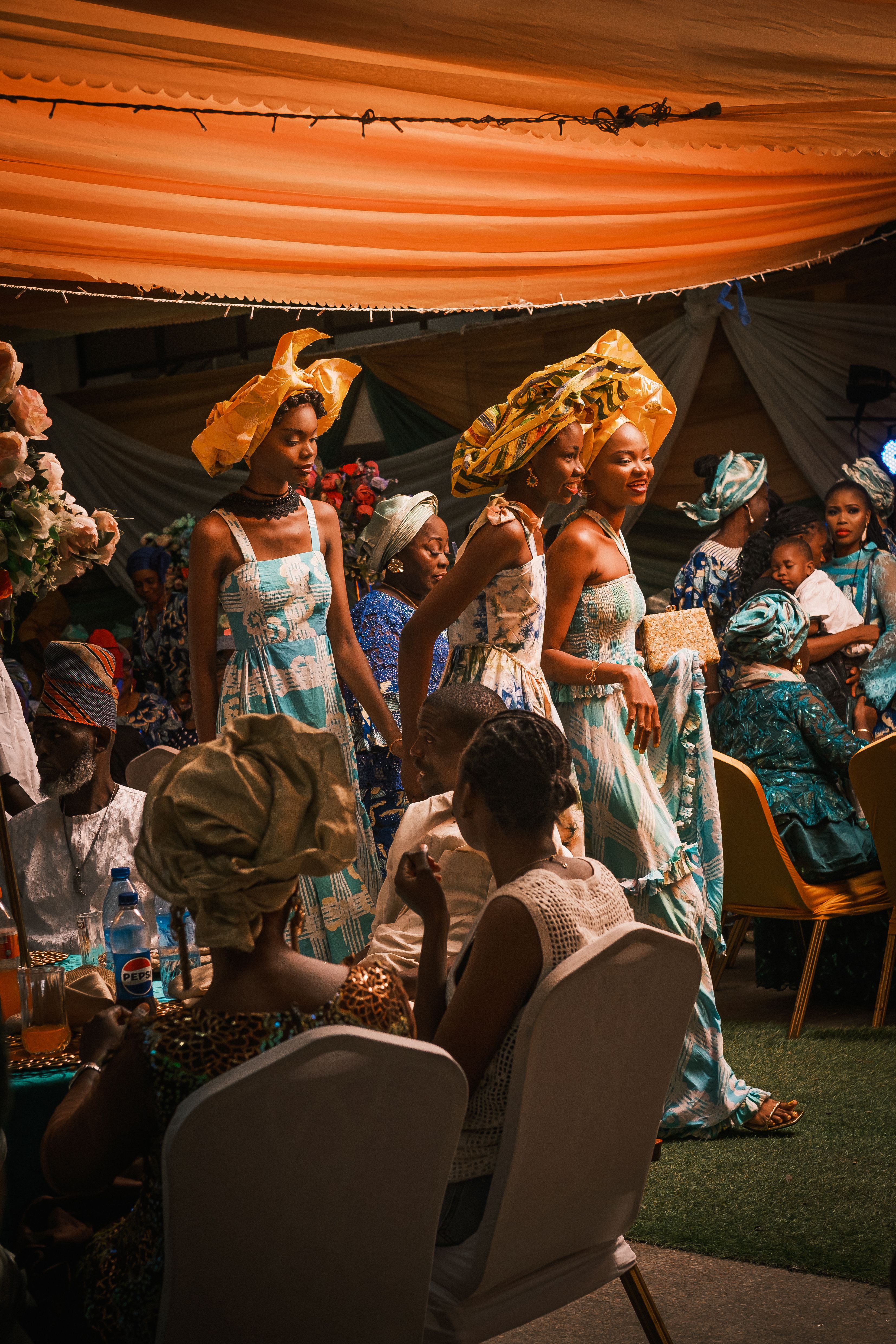
Inside the tent, an older woman in blue lace looks up mid-sentence, and the models lean toward her the way you lean toward someone deciding whether you belong. They are let in. Later, at a table crowded with Coca-Cola bottles and gold satin napkins, the gele has shifted from gold to a deep floral yellow, tall enough to graze the flower arrangement suspended above the table, and one woman waves off a joke with a hand still holding a fork.
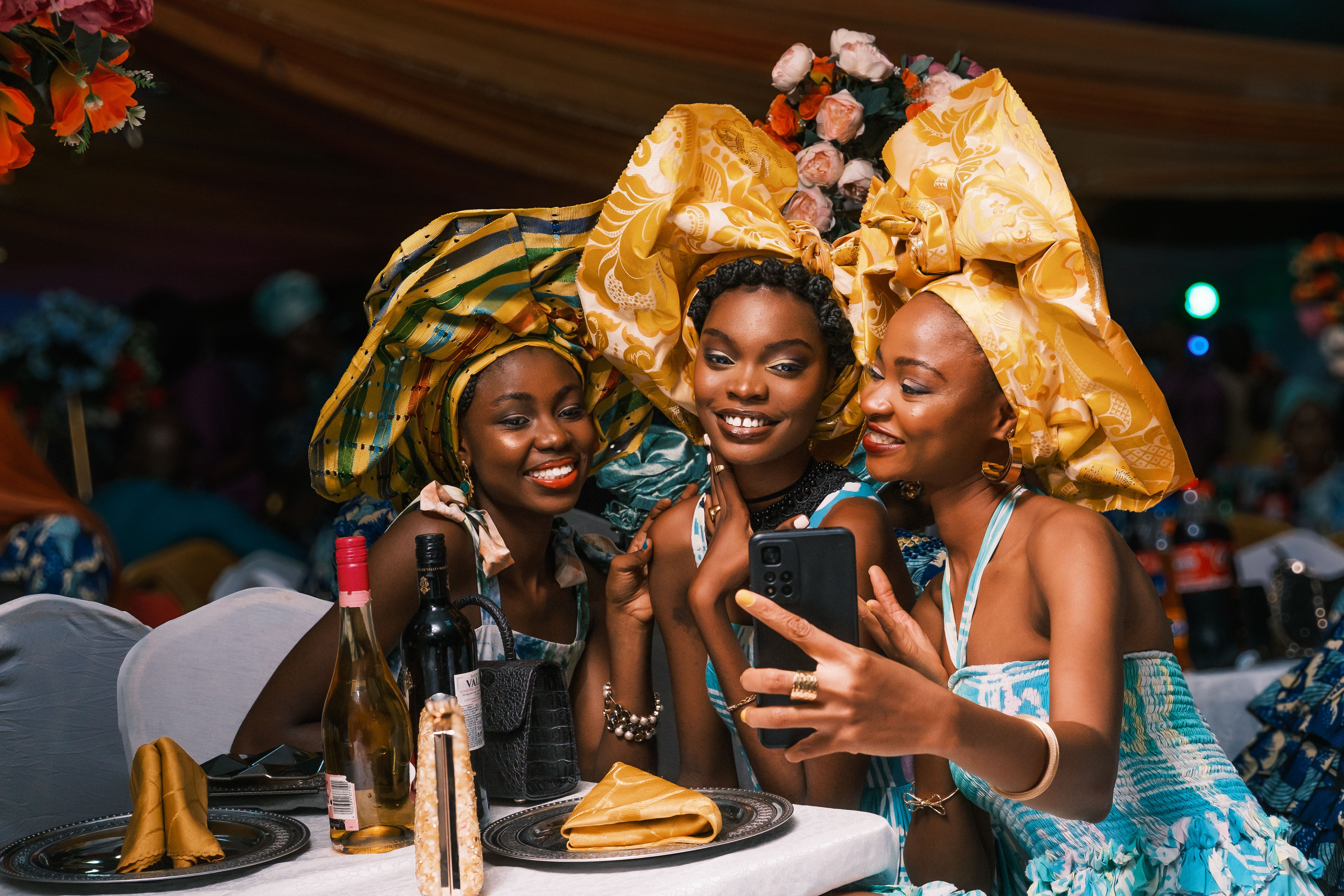
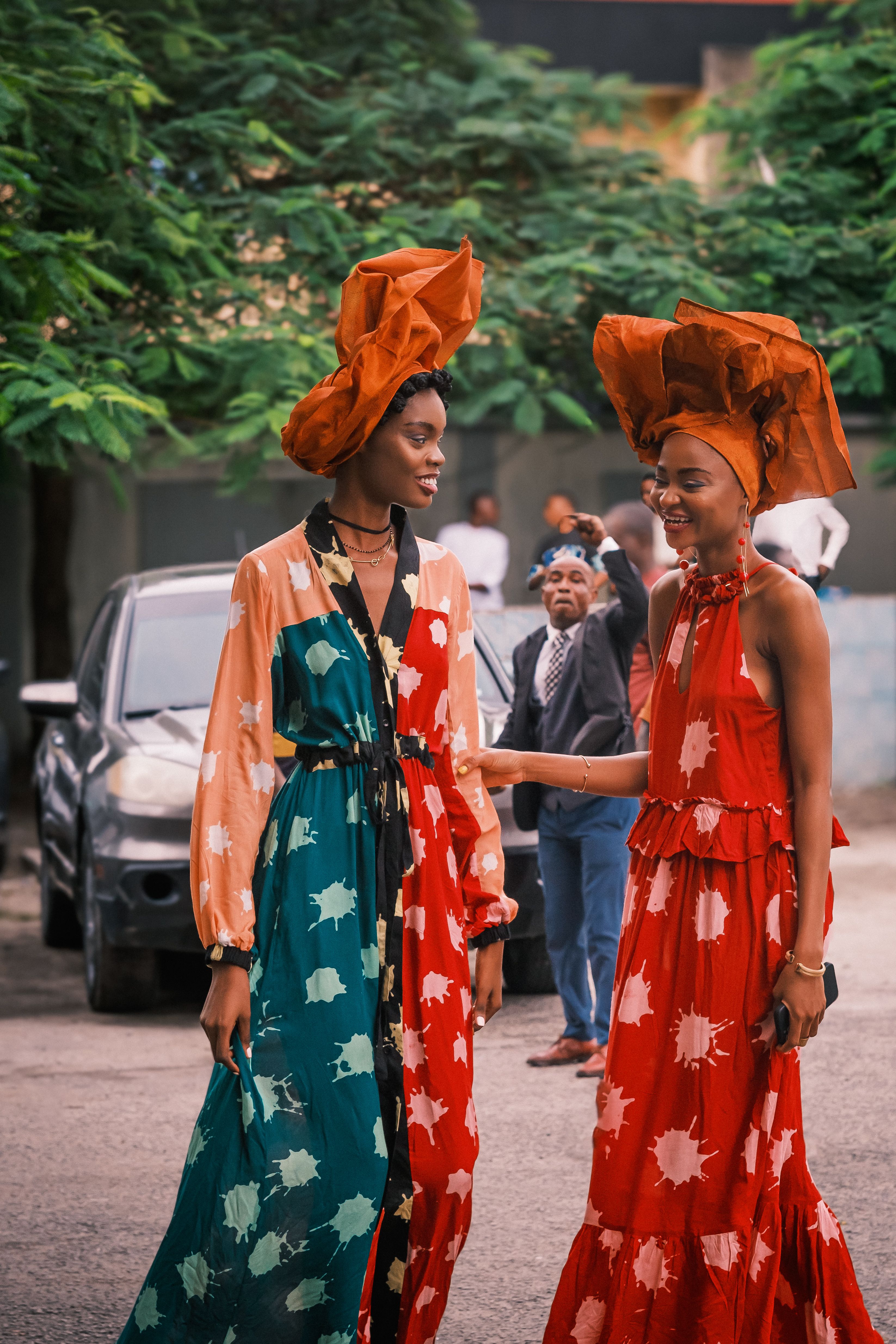
Then the color turns. Out on a different street, the gele goes from gold to a burnished copper, and the dresses change with it, red splashed with white blossoms, teal patched with pink, worn by women who lean into a circle of drummers in floral agbada like they have been coming to this exact corner for years. This is a second costume for a second act of the night, the kind of change real aso-ebi guests make between the afternoon engagement and the evening reception, proof that even the crashers know the party has more than one scene to dress for.
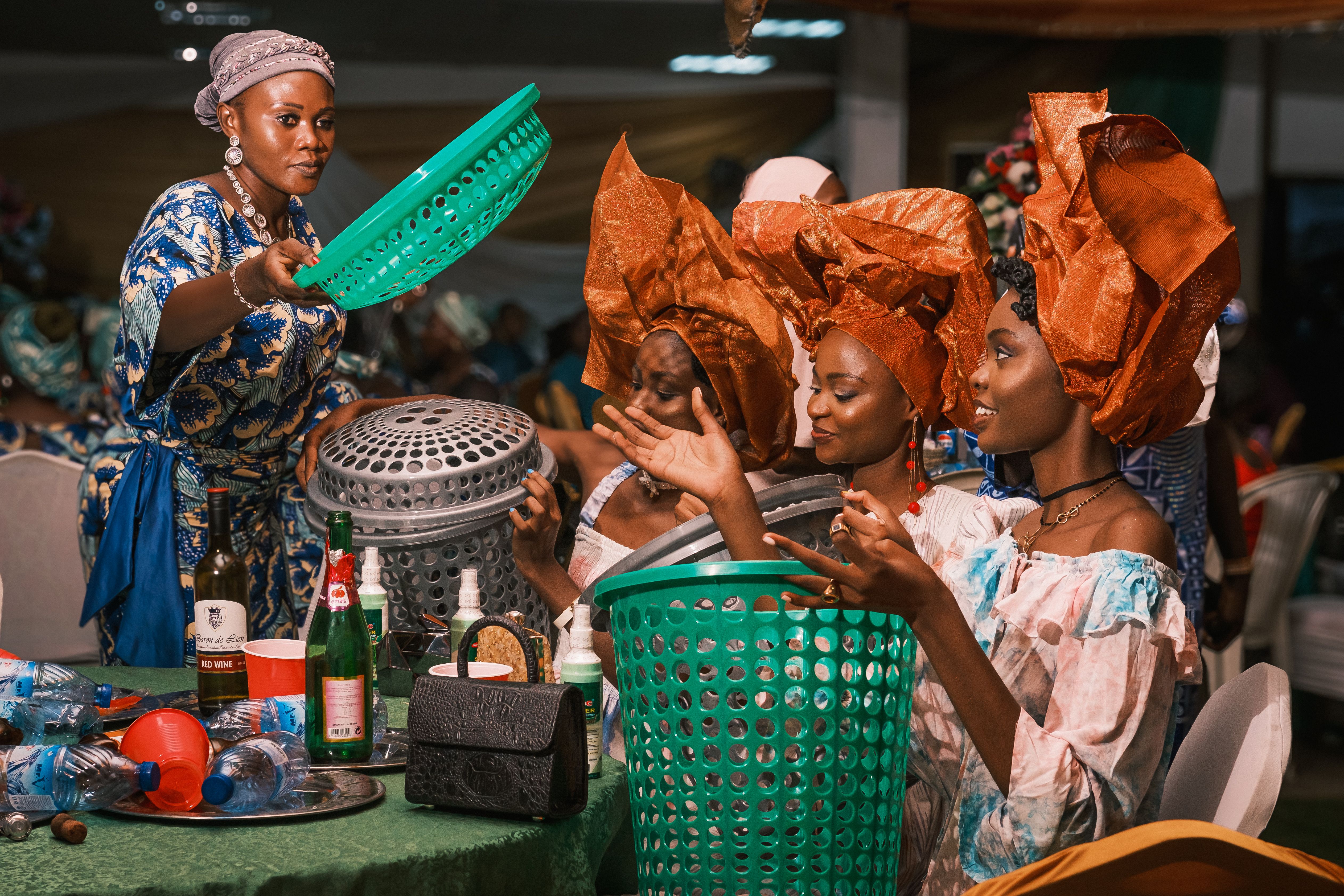
Deeper into the tent, the copper gele reappears at a table where two women hold up plastic laundry baskets like they are modeling hats, laughing at their own joke, a can of mosquito repellent standing between them and a bottle of red wine. A few frames later the same table has been lived in properly: bottles knocked sideways, an insect spray can doing sentry duty, an orange soda cap floating in a puddle of condensation, a gold clutch resting against the mess like it belongs there more than the mess does. On the dance floor, the women thumbs-up each other mid-laugh, a diamond-shaped clutch and a crocodile-embossed handbag both still in hand, refusing, even mid-dance, to be set down.
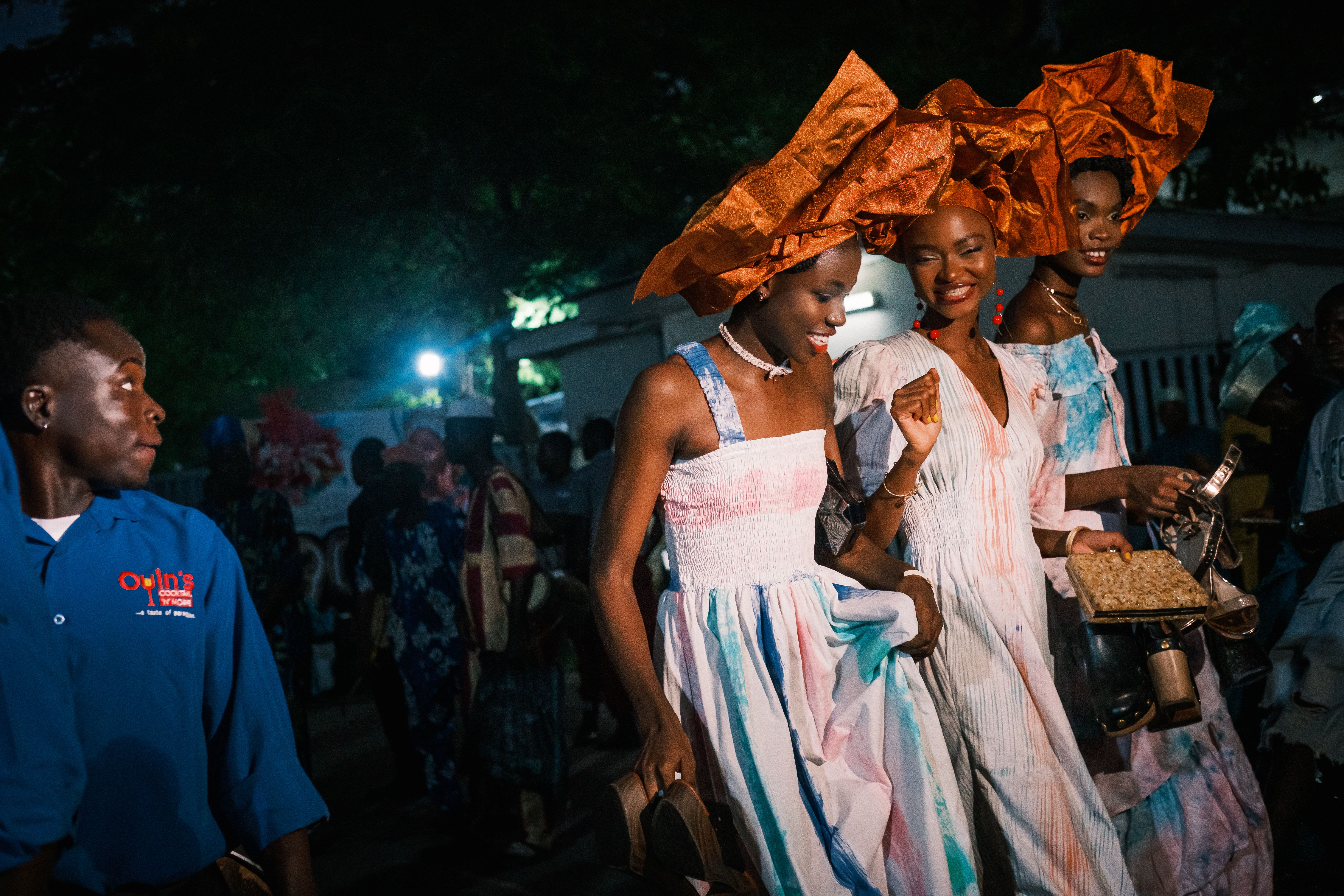
Finally, past midnight, three women in the copper gele walk past a man in a blue shirt printed with a cocktail bar's logo, one of them mid-laugh with her fist half raised, a pair of shoes dangling from her fingers because her feet have had enough. Nobody stops them on the way out. Nobody stopped them on the way in, either. The tailor got the fabric right, the gele got tied tall enough, and for one whole night, that was the only invitation anyone actually checked.